







🎧 Listen to This Article
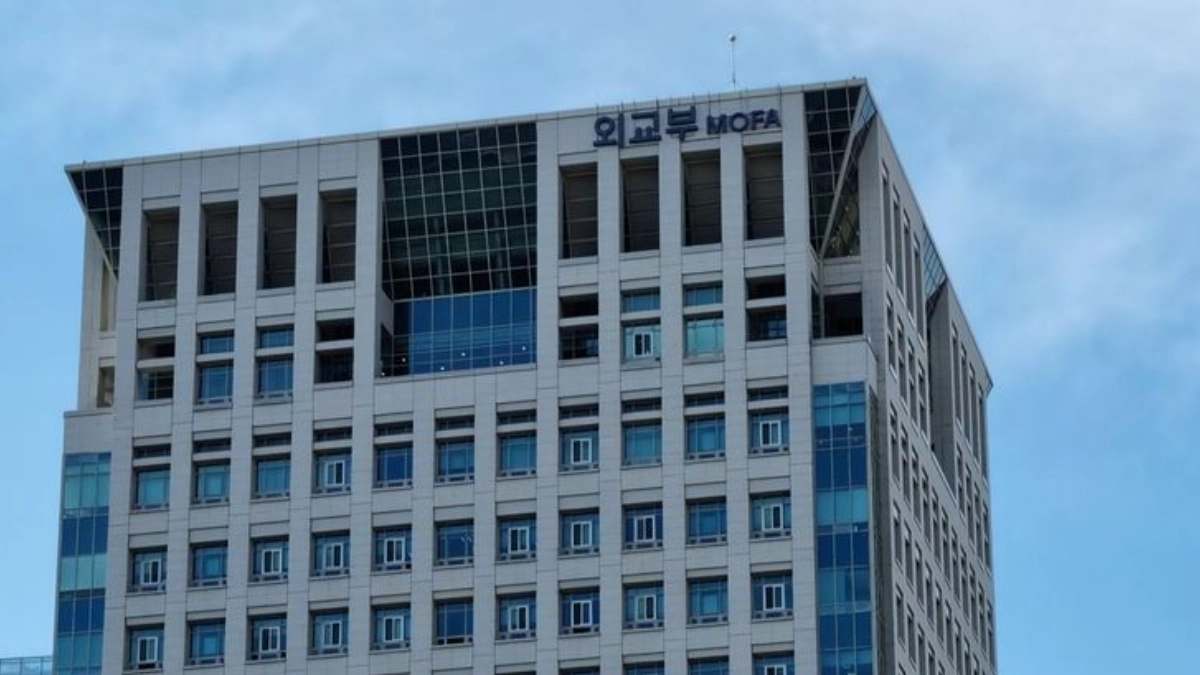
The administrative containment protocols surrounding the newly declared international health emergency have officially expanded into the East Asian diplomatic and corporate sectors. Today, Thursday, May 21, 2026, South Korea’s Ministry of Foreign Affairs (MOFA) announced a significant escalation of its formal travel advisories for East and Central Africa, triggering the implementation of the South Korea Level-4 Travel Ban 2026 framework.
The update imposes highly restrictive travel blockades on the Democratic Republic of the Congo’s (DRC) northeastern Ituri Province and sharply elevates advisory tiers for neighboring Uganda. This sudden regulatory move forces multinational engineering, mining, and technology corporations headquartered in Seoul to immediately overhaul their sub-Saharan personnel deployment frameworks.
The Level-4 Statutory Hammer: Legal and Corporate Liabilities
South Korea’s travel advisory framework relies on a strict four-tiered architecture. The designation of a Level-4 ban is a rare, legally binding state intervention that transitions corporate travel from a matter of internal risk management to an issue of direct federal criminal liability under the South Korea Level-4 Travel Ban 2026 guidelines.
Compliance Alert: Under the active provisions of South Korea’s Passport Act, the criminal fine for unauthorized entry into a Level-4 zone is capped at up to 10 million Korean Won (KRW). This translates to roughly 6,600 to 7,000 USD, depending on exchange volatility. Please ensure your compliance sheets reflect KRW rather than Japanese Yen (JPY) so that all documentation accurately matches the official statutory text before filing.
The active text outlines three clear operational boundaries:
- The Passport Act Mandate: Citizens are statutorily prohibited from visiting or staying in countries or regions under a Level-4 designation. Unauthorized entry or failure to evacuate carries strict penalties, including up to one year of imprisonment or the 10 million KRW criminal fine.
- The Ituri Exclusion Zone: The mandate strictly isolates the Ituri Province, the epicenter of the compounding Bundibugyo virus strain Ebola outbreak. This creates an immediate operational hurdle for South Korean industrial contractors and engineering specialists attached to regional infrastructure and mineral extraction syndicates.
- The Uganda Buffer: Concurrently, MOFA raised portions of Western Uganda to a high-level advisory tier. While short of an absolute ban, this classification activates mandatory government registration, discourages non-essential corporate deployments, and triggers rigid, state-enforced medical tracking for returning personnel.
The Personnel Squeeze: Tracking Quarantine and Isolation Overhead
For multinational compliance teams, the primary operational challenge is managing the administrative and physical latency of the mandatory quarantine network. South Korea’s Disease Control and Prevention Agency (KDCA) has integrated real-time data-matching hooks at Incheon International Airport to flag any passenger arriving via transpacific or Middle Eastern transit hubs with a recent travel history in the Great Lakes region of Africa.
Returning personnel must absorb an immediate, mandatory 14-to-21 day supervised quarantine and active monitoring protocol. This isolation window temporarily removes high-value technical specialists from active operations, inflating the net project timeline and driving up corporate compliance costs.
Personnel Compliance Cost Multiplier: Plain-Text Operations Model
To help global mobility coordinators and enterprise human resource divisions track asset latency without experiencing standard website text-rendering errors or database bugs, the compliance cost calculation is structured entirely in plain text:
Personnel Compliance Cost = Sum of [ (Daily Specialist Wage × Mandatory Quarantine Days) + Isolation Facility Logistics Overhead ] + Aggregate PCR Diagnostic Validation Costs
To map this model directly into standard, system-friendly data fields:
- Daily Specialist Wage: The fully loaded daily corporate wage and operational overhead coefficient for an individual technical specialist.
- Mandatory Quarantine Days: The statutory duration of the mandatory isolation period, currently locked by the KDCA at up to 21 days for high-risk contact zones.
- Isolation Facility Logistics Overhead: The localized hospitality, security, and logistics costs required to maintain the employee within a government-approved quarantine facility.
- Aggregate PCR Diagnostic Validation Costs: The total expense of specialized multi-tiered real-time PCR diagnostic tests required to secure a formal domestic clearance certificate at Incheon.
South Korea’s Emergency Travel & Compliance Matrix
The targeted adjustments leave no room for corporate grey areas, establishing direct mandates based on regional exposure:
| Regional Zone | Prior Advisory Level | Active Enforced 2026 Tier | Corporate Operational Mandate |
| DRC: Ituri Province | Level-3 (Recommend Evacuation) | Level-4 (Travel Banned) | Absolute Evacuation; new deployments legally halted under criminal penalty. |
| Western Uganda Borders | Level-2 (Highly Cautious) | Level-3 (Recommend Evacuation) | Suspension of non-essential operations; voluntary repatriation of non-core staff. |
| Rest of Uganda (incl. Kampala) | Level-1 (Precautionary) | Level-2 (Highly Cautious) | Mandatory daily health reporting; active pre-departure thermal profiling. |
| Inbound Incheon Transit | Standard customs clearance | KDCA Quarantine Dragnet | Mandatory up to 21-day isolation for any regional exposure markers. |
Inside Look: The Cost of Jurisdictional Pre-emption
Let’s cut through the sanitized diplomatic language: the rapid deployment of the South Korea Level-4 Travel Ban 2026 framework provides a clear reality check for corporate global mobility teams. In a highly connected industrial economy, public health events are no longer just medical issues—they are immediate legal barriers to execution.
When a sovereign state invokes its Passport Act over an Ebola surge, your internal corporate insurance policies and standard travel waivers become completely secondary. You cannot lobby your way out of a criminal statute. For South Korean conglomerates engaged in infrastructure and resource acquisition across East Africa, this requires a total shift in human capital strategy. Companies must prepare to rapidly transition localized engineering tasks to regional contractors or face steep compliance costs as returning domestic specialists are sidelined in Incheon quarantine facilities for weeks at a time.


Click here to open the standard version and post your comment.