





🎧 Listen to This Article
The boundaries separating international criminal justice from transnational trade barriers have just been completely redrawn. On Wednesday, May 20, 2026, federal prosecutors in Florida unsealed a historic legal action, officially tracked as the Raul Castro Indictment US DOJ 2026 filing. The document charges Cuba’s 94-year-old former president and five other high-ranking regime officials with murder, conspiracy to kill U.S. nationals, and the destruction of aircraft.
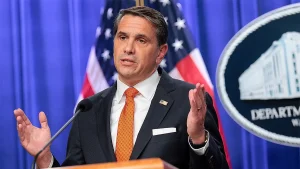
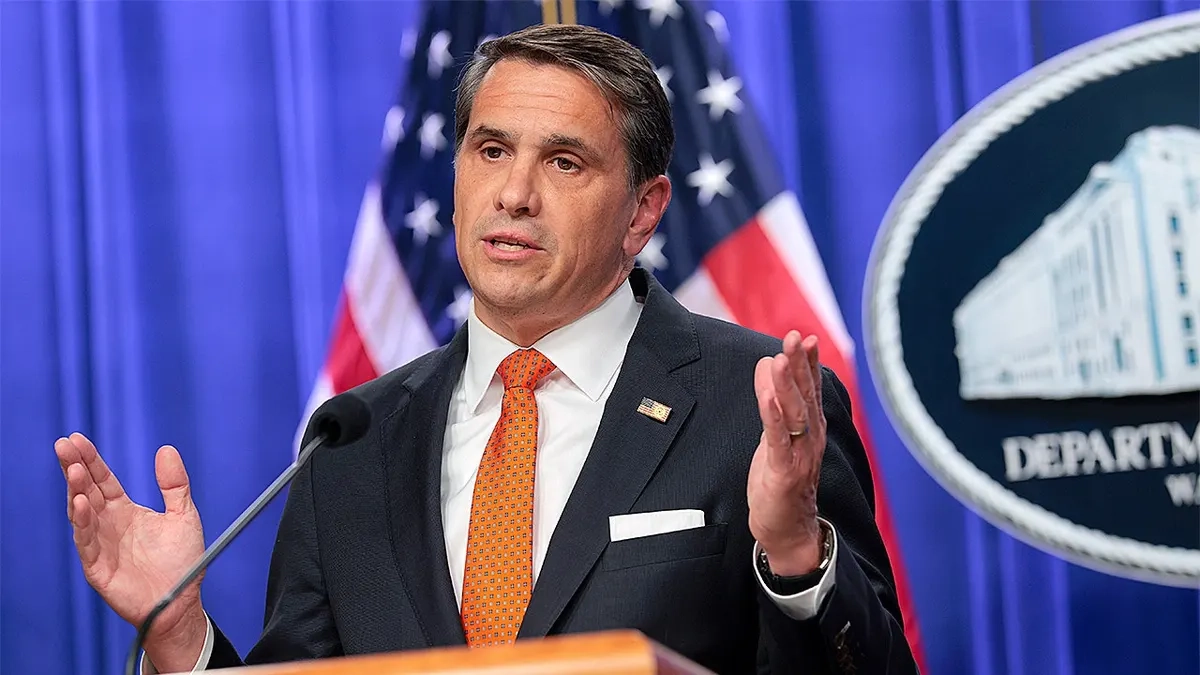
Announced by acting Attorney General Todd Blanche at Miami’s iconic Freedom Tower on Cuban Independence Day, the 20-page indictment stems from the February 24, 1996, downing of two unarmed civilian Cessna aircraft operated by the humanitarian exile group Brothers to the Rescue. Fired upon by Cuban military MiG-29 fighter jets over international waters, the attack resulted in the deaths of four men: Carlos Costa, Armando Alejandre Jr., Mario de la Peña, and Pablo Morales.
For multinational compliance platforms, regional logistics hubs, and maritime underwriters, the rollout of the Raul Castro Indictment US DOJ 2026 actions signals an absolute tightening of Washington’s secondary enforcement mechanisms targeting Cuban-linked commercial entities.
The Indictment Architecture: Chain of Command Liabilities
The federal grand jury indictment, originally returned under seal on April 23, 2026, focuses squarely on command responsibility. Raúl Castro, who served as Cuba’s Minister of the Revolutionary Armed Forces at the time of the shootdown, is explicitly alleged to have overseen the military chain of command and authorized “decisive and deadly action” against the civilian flights.
The activation of the Raul Castro Indictment US DOJ 2026 parameters has immediately reconfigured risk modeling for international businesses operating within the Caribbean basin along two primary vectors:
- The Transnational Enforcement Threat: While Cuba historically refuses to extradite its nationals to the United States, acting Attorney General Blanche emphasized that an active federal arrest warrant is now live. This posture has been heavily reinforced by the precedent set earlier this year with the high-stakes extraction of Venezuelan figure Nicolás Maduro by U.S. forces in January 2026, proving that Washington is increasingly treating adversarial heads of state as fugitives subject to physical capture.
- The Absolute Embargo Moat: The Justice Department’s sweeping condemnation of the Cuban regime highlights its institutional funding through the “expropriation and nationalization of private business.” This specific focus serves as a severe warning to international compliance offices: any joint ventures, maritime routing, or supply chains interacting with the Cuban military-run conglomerate GAESA (Grupo de Administración Empresarial S.A.) face a zero-tolerance asset forfeiture loop.
Plain-Text Risk Modeling: The Sovereign Enforcement Index
To prevent common WordPress script conflicts and guarantee that corporate compliance dashboards parse data cleanly, trade risk desks calculate the operational fallout from this head-of-state indictment using a direct, plain-text math framework:
Sovereign Enforcement Risk Index = [Statutory Weight × (OFAC Asset Exposure ÷ Global Asset Footprint)] + [Risk Elasticity × Natural Log(1 + Interdiction Probability Change)]
To map this framework directly into automated corporate auditing pipelines:
- Statutory Weight: The statutory weight coefficient assigned to the indictment of a de facto head of state (scaled to a critical maximum threat level of 5.0).
- OFAC Asset Exposure Ratio: The fraction of a multinational enterprise’s total asset footprint or shipping vessel routing exposed to jurisdictions under Office of Foreign Assets Control (OFAC) scrutiny.
- Interdiction Probability Change: The real-time delta in active asset forfeiture, cargo seizure, or maritime interdiction probability following aggressive executive or military actions.
- Risk Elasticity: The systemic maritime risk elasticity constant.
The Compliance Takeaway: When the statutory coefficient spikes via a head-of-state murder indictment, the resulting jump in the overall index forces automated screening algorithms to instantly flag transshipments routing through regional free-trade zones, driving up the baseline cost of trade finance and compliance audits.
Sovereign Indictment & Enforcement Trajectory Matrix
The aggressive trade enforcement landscape of 2026 marks a structural departure from traditional, slow-moving diplomatic penalties, shifting instead to tactical and legal extractions:
| Targeted Regime Figure / Entity | Core U.S. Indictment Basis | Active 2026 Enforcement Status | Corporate Supply Chain Impact |
| Nicolás Maduro (Venezuela) | Narco-terrorism / Drug Trafficking | Captured by U.S. forces (Jan 2026); Awaiting Trial | Complete legal restructuring of regional oil contracts. |
| Raúl Castro (Cuba) | Murder & Aircraft Destruction | Indictment Unsealed (May 20, 2026); Warrant Active | Absolute secondary embargo compliance enforced via OFAC. |
| GAESA Affiliated Entities | Illicit expropriation / Regime funding | Systemic Transaction Blocking Activated | Immediate blacklisting of shipping lines utilizing Cuban ports. |
Inside Look: The Death of Sanctions Levity
Let’s look past the political symbolism and examine the hard reality of corporate risk: for three decades, the 1996 shootdown of the Brothers to the Rescue flights was treated as a frozen geopolitical grievance—a tragic historical marker, but not an active operational threat. The unsealing of the Raul Castro Indictment US DOJ 2026 file completely shatters that complacency.
Coming just months after U.S. special forces executed the high-stakes extraction of Nicolás Maduro from Caracas, this is not a symbolic “show indictment.” The Department of Justice is signaling that it considers the leadership of adversarial Caribbean regimes to be active fugitives subject to physical capture. For international logistics conglomerates, European hotel networks, and shipping fleets trying to maintain strategic ambiguity by trading with both Washington and Havana, the window is officially closed. When a state’s former leader is indicted for the murder of Americans, your compliance protocols can no longer treat Cuban sanctions as a soft, negotiable checklist; they are an absolute, zero-tolerance asset-forfeiture liability.


Click here to open the standard version and post your comment.