








🎧 Listen to This Article
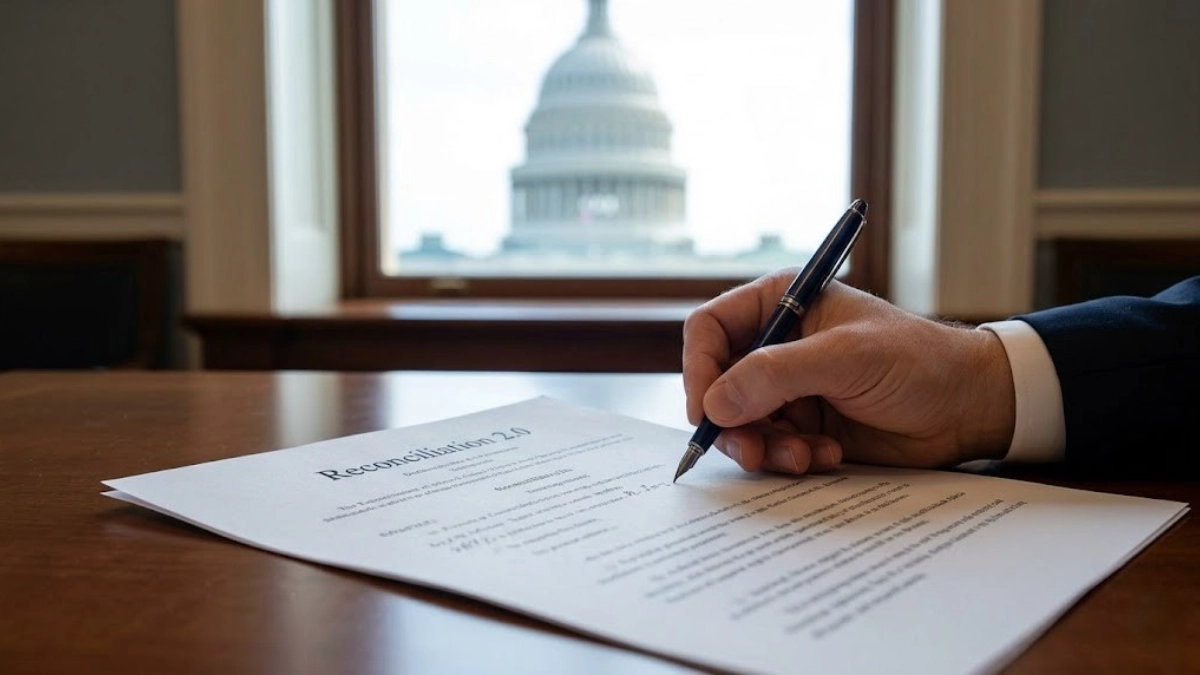
Reconciliation 2.0 officially accelerated its legislative journey today as the U.S. Senate moved the bill into the formal drafting phase. This $140 billion sequel to 2025’s One Big Beautiful Bill Act (OBBBA) signals a fundamental pivot in fiscal strategy. While the OBBBA provided broad tax relief, Reconciliation 2.0 focuses on mandatory funding surges for national security, border enforcement, and the infrastructure of oversight.
The $140 Billion Mandate: Beyond Annual Budgets
The primary objective of Reconciliation 2.0 is to bypass the volatility of annual appropriations. By utilizing the reconciliation process, the Senate aims to lock in a ten-year funding stream for Immigration and Customs Enforcement (ICE) and Customs and Border Protection (CBP).
- Mandatory Funding Surge: The bill seeks to allocate between $70 billion and $140 billion for modernizing border technology, increasing personnel, and expanding detention capacity.
- The “Byrd Rule” Hunt: To comply with Senate rules, Reconciliation 2.0 is being packed with fee-based structures and civil penalty increases to ensure every provision has a direct budgetary impact.
- The Offset Watch: Lawmakers are hunting for “Section 2026 Offsets,” including the clawback of unspent pandemic funds and stricter verification for refundable tax credits to pay for the surge.
Comparison: OBBBA vs. Reconciliation 2.0
| Feature | OBBBA (2025) | Reconciliation 2.0 (2026) |
| Primary Theme | Economic Growth / Tax Cuts | National Security / Enforcement |
| Key Mechanism | $32,200 Standard Deduction | Mandatory ICE/CBP Funding |
| Revenue Impact | Large Deficit Increase | Aiming for “Deficit Neutral” |
| Compliance Focus | Small Business Simplification | Enhanced Audit & Verification |
The Strategic Compliance Shift
Reconciliation 2.0 represents a “maturation” of fiscal policy. By moving enforcement funding into a reconciliation bill, leadership is insulating the border budget from future government shutdown threats. However, for the tax community, the real story lies in the offsets. If the Senate funds this $140 billion surge by tightening “integrity checks” on existing tax credits, we could see a de facto increase in the effective tax rate for middle-income filers through administrative friction.


Click here to open the standard version and post your comment.