








🎧 Listen to This Article
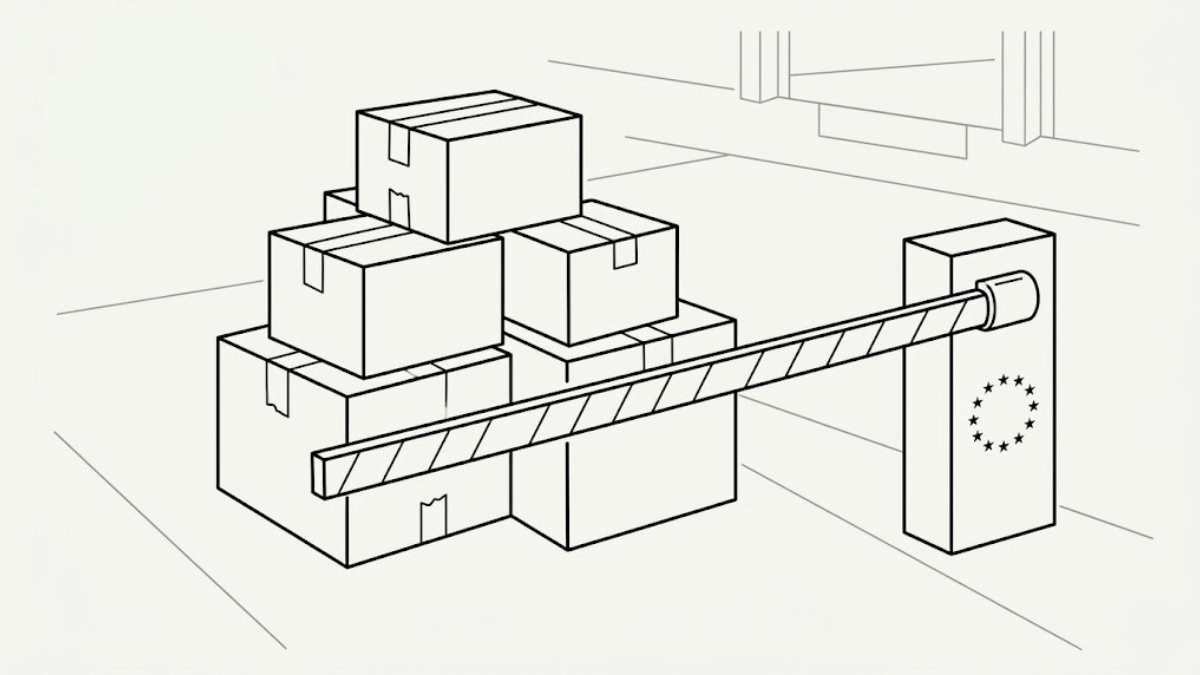
The EU Customs Reform 2026 framework has officially entered its most disruptive phase yet, catching many international e-commerce merchants entirely off guard. As of today, Monday, May 18, 2026, customs clearinghouses across several European Union member states are experiencing significant micro-logistics backlogs. This operational friction stems from the roll-out of interim national package handling fees targeting low-value consignments from non-EU countries—a tactical move designed to eliminate cross-border tax arbitrage ahead of a massive regulatory shift this summer.
The Micro-Logistics Squeeze: National Fees Take Hold
While the centralized pillars of the EU Customs Reform 2026 strategy will fully materialize over the next few months, individual member states have stepped in with their own localized cost-compensation mechanisms.
Clearinghouses in Italy and Romania have been actively collecting their respective €2 and RON 25 (~€5) fees since January. France joined the fray on March 1, 2026, deploying a €2 administrative tax applied per individual article. These fees are explicitly aimed at recovering the steep operational costs of manually inspecting and processing millions of small parcels every single week.
Because European customs authorities now demand clean, upfront digital data streams before granting final import clearance, major non-resident digital platforms are seeing their shipments hit a structural wall at key continental entry hubs.
Dismantling the Undervaluation Playbook
The core focus of these localized dragnets is the total eradication of systemic customs evasion. For years, non-EU digital platforms routinely exploited the €150 customs duty exemption. Vendors frequently under-declared invoice values or split single commercial orders into multiple low-value packages to cross the border completely tax-free.
To neutralize these tactics, clearinghouses are using advanced data-matching algorithms built straight into the Import One-Stop Shop (IOSS) architecture:
- Dynamic Value Cross-Checking: The system automatically cross-references the declared value on the digital manifest against real-time global marketplace pricing indices for identical product categories. If a gadget is listed at an impossibly low price, the shipment is instantly frozen.
- Consignment Aggregation: If the algorithm catches multiple distinct packages originating from the same vendor and heading to the identical destination address within a short time window, it flags the cargo for a manual audit, completely killing the “shipment splitting” strategy.
The 2026 Low-Value Import Roadmap
The current wave of disparate national fees serves as a critical bridge toward a highly coordinated, block-wide regulatory rollout scheduled for the remainder of the fiscal year:
| Regulation / Fee Component | Effective Date | Operational & Fiscal Impact |
| Interim National Handling Fees | Active (Jan – March 2026) | Varies by state (e.g., France, Italy); compensates localized customs infrastructure costs. |
| Abolition of €150 Exemption | July 1, 2026 | Total removal of the low-value customs duty relief threshold across the EU. |
| Interim Flat-Rate Customs Duty | July 1, 2026 | Enforces a flat €3 duty per item (based on HS6 subheadings) on all parcels under €150. |
| Unified EU Handling Fee | November 1, 2026 | Expected €2 to €3 levy per declaration line, replacing separate national fees. |
The Critical Shift in Importer Liability
Beyond the rising financial costs, the EU Customs Reform 2026 package completely redefines legal risk. Individual European consumers will no longer be treated as the importers of record for distance sales. Instead, the non-EU platforms and distance sellers assume 100% of the importer responsibilities.
Sellers are now legally obligated to guarantee all customs formalities, manage product safety standards, and cover any outstanding duties. The penalties for failing to adapt are severe: non-compliance can trigger fines of up to 6% of the total value of goods imported during the previous 12 months, alongside the immediate suspension of trusted trader status.
The End of the “Free Shipping” Illusion
Non-resident e-commerce platforms have treated European borders like an open playing field for nearly a decade by playing the de minimis system. The logistics friction mounting at entry hubs this week is the final warning shot. By using algorithmic data matching to freeze undervalued shipments at the border, European customs authorities are proving that paper-only compliance is a thing of the past.
When the flat €3 duty kicks in this July, it won’t just hit profit margins—it will completely upend the automated checkout economics for high-volume cross-border trade. Furthermore, because that €3 applies per HS6 item category rather than per box, a single parcel with three different types of goods will suddenly owe €9 in duties. Importers who haven’t fully reconfigured their ERP systems to calculate precise landed costs at the point of sale are facing catastrophic cargo backlogs by mid-summer.


Click here to open the standard version and post your comment.