







🎧 Listen to This Article
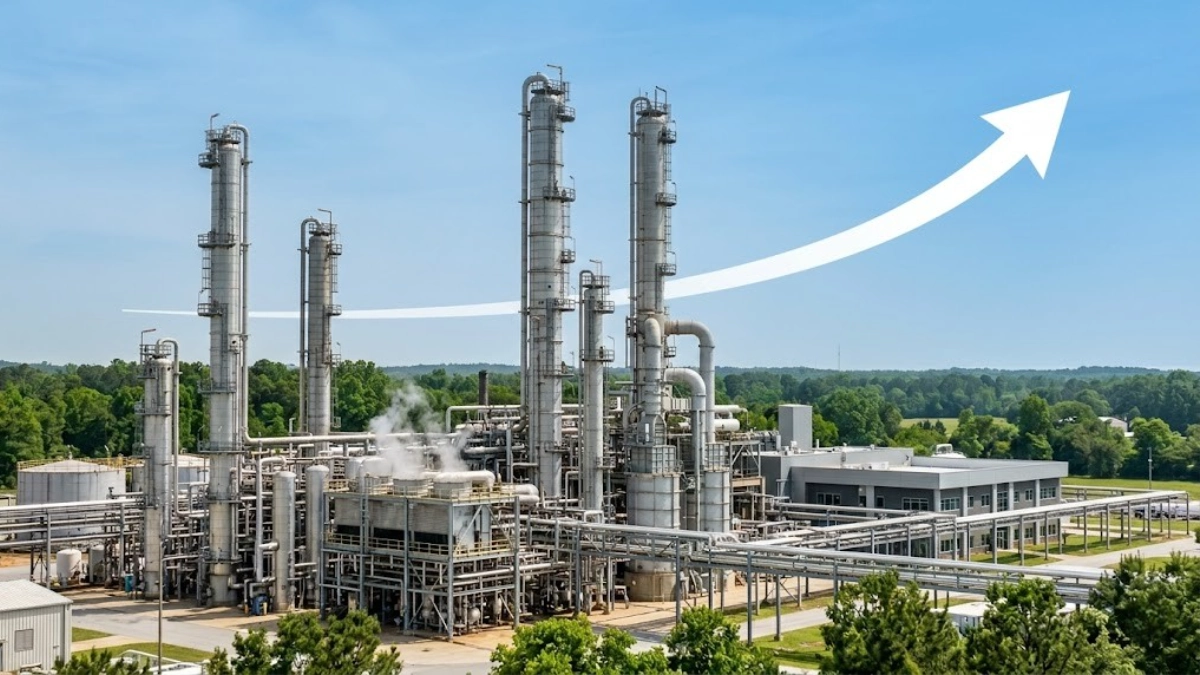
The newly inaugurated BASF Refinery Catalyst R&D Center in Attapulgus, Georgia, has officially opened its doors, giving the global downstream energy sector a major new hub for process optimization. Launched today, Monday, May 18, 2026, this state-of-the-art research and development asset is strategically embedded directly inside the company’s largest global catalyst manufacturing facility.
By co-locating applied research with large-scale industrial output, the chemical giant aims to permanently eliminate the historical latency gap between laboratory chemical synthesis and commercial engineering.
Accelerating the Scale-Up: The Verbund Proximity Advantage
The primary bottleneck in downstream industrial chemistry has long been “scale-up drag”—the frustrating phase where a catalyst formulation that performs flawlessly in a pristine laboratory environment underperforms when introduced to the turbulent, high-volume conditions of a commercial refinery plant.
The launch of the BASF Refinery Catalyst R&D Center directly addresses this operational friction by uniting previously isolated technical tracks:
- Direct Operations Interoperability: By housing applied R&D, process engineering, and real-world manufacturing teams under a single geographic canopy, next-generation catalyst formulations can transition immediately into automated production testing.
- Streamlined Quality Infrastructure: The facility serves as a central hub for analytical excellence, anchored by modern Quality Assurance (QA) and Quality Control (QC) labs designed to minimize batch-to-batch structural variability.
- Customization Velocity: This hyper-localized feedback loop enables the site to engineer bespoke catalyst architectures in direct collaboration with global refining partners, matching regional crude oil profiles with precise target output requirements.
The Core Mission: Re-engineering Fluid Catalytic Cracking (FCC)
Product development at the Attapulgus laboratory centers heavily on advanced Fluid Catalytic Cracking (FCC) testing. As refineries globally face dual pressures to optimize shrinking margins while incorporating alternative, lower-carbon, and circular feedstocks—such as pyrolysis oils derived from plastic waste or bio-based lipids—catalyst adaptability has become the primary lever for operational profitability.
To keep these metrics flawless for standard web displays and internal enterprise systems, the underlying kinetic chemistry used by the center to maximize the yield of high-value light olefins and gasoline fractions is mapped using a straightforward volumetric rule:
- Optimized Light Olefin Yield = Feed Flexibility Coefficient × Intrinsic Catalyst Activity Index × [Catalyst-to-Oil Mass Ratio] ^ Selectivity Exponent × Apparent Activation Energy Factor
If the biophysical properties of an incoming crude slate shift unexpectedly, technicians can use this multi-dimensional data mesh to recalibrate the catalyst structure in days rather than months, ensuring that the final output doesn’t suffer from thermal degradation or unwanted coke formation.
The R&D Evolution: Disparate Lab Testing vs. Co-Located Innovation
| Operational Metric | Legacy R&D Pipeline | Active 2026 Co-Located Framework |
| Testing Environment | Isolated bench-scale simulations | Real-world manufacturing conditions |
| Scale-Up Turnaround | Months of cross-site feedback loops | Accelerated, near real-time feedback cycle |
| Feedstock Adaptability | Fixed baseline testing windows | Dynamic customization for circular/bio feeds |
| Quality Control Hook | Post-production batch auditing | In-line QA/QC analytical integration |
Business Viewpoint: Driving Margin Resilience in a Transitional Market
The Reality Check: BASF’s choice to drop an advanced research center directly on top of its largest global catalyst plant is a textbook play in heavy industrial efficiency. In 2026, refineries cannot afford to wait months for catalyst adjustments while feedstocks become increasingly volatile and unpredictable due to geopolitical shifts and circular supply chain mandates.
By treating the Attapulgus facility as a living laboratory, the company isn’t just selling a chemical product; they are offering an agile performance platform. If you are an energy executive trying to squeeze maximum propylene or high-value gasoline yields out of lower-quality or alternative crude slates, this co-located infrastructure is built to shorten your time-to-market drastically.


Click here to open the standard version and post your comment.