








🎧 Listen to This Article
The launch of the BloombergNEF New Energy Outlook 2026 establishes that the structural architecture of global energy markets has officially reached a permanent historical inflection point. Released today, Tuesday, May 19, 2026, this definitive annual briefing delivers a comprehensive blueprint of a rapidly decoupling global economy.
The report underscores that a sequence of severe macroeconomic disruptions has permanently broken old fossil fuel supply chains, forcing sovereign nations to prioritize home-grown electrical infrastructure as the ultimate guarantee of national security.
The Tripartite Geopolitical Catalysts: Decoupling at Speed
According to the BloombergNEF New Energy Outlook 2026, the transition to clean technology is no longer being driven primarily by abstract climate altruism. Instead, the global economy is reacting defensively to three successive systemic shocks that have fundamentally disrupted this decade:
- The global supply chain paralyses left behind by COVID-19.
- The profound structural gas dislocations resulting from the war in Ukraine.
- The sharp inflationary pressures of the recent Iran war in the Middle East.
Fossil fuel import liabilities have simply become too expensive for sovereign balance sheets to sustain under current conditions. BNEF’s predictive modeling indicates that highly import-dependent economies—such as India, Japan, Vietnam, and the European Union—are aggressively deploying renewables to insulate their GDP from volatile transpacific and Middle Eastern fuel corridors. The baseline conclusion is stark: legacy fossil fuels can no longer compete on pure resource cost over the long term.
The Electrification Core: AI Data Centers and EV Overhauls
The transition signals an unprecedented acceleration in power consumption across both advanced and emerging economies. Electrification is projected to meet two-thirds of all new global energy demand over the next two decades, anchored by two massive structural shifts:
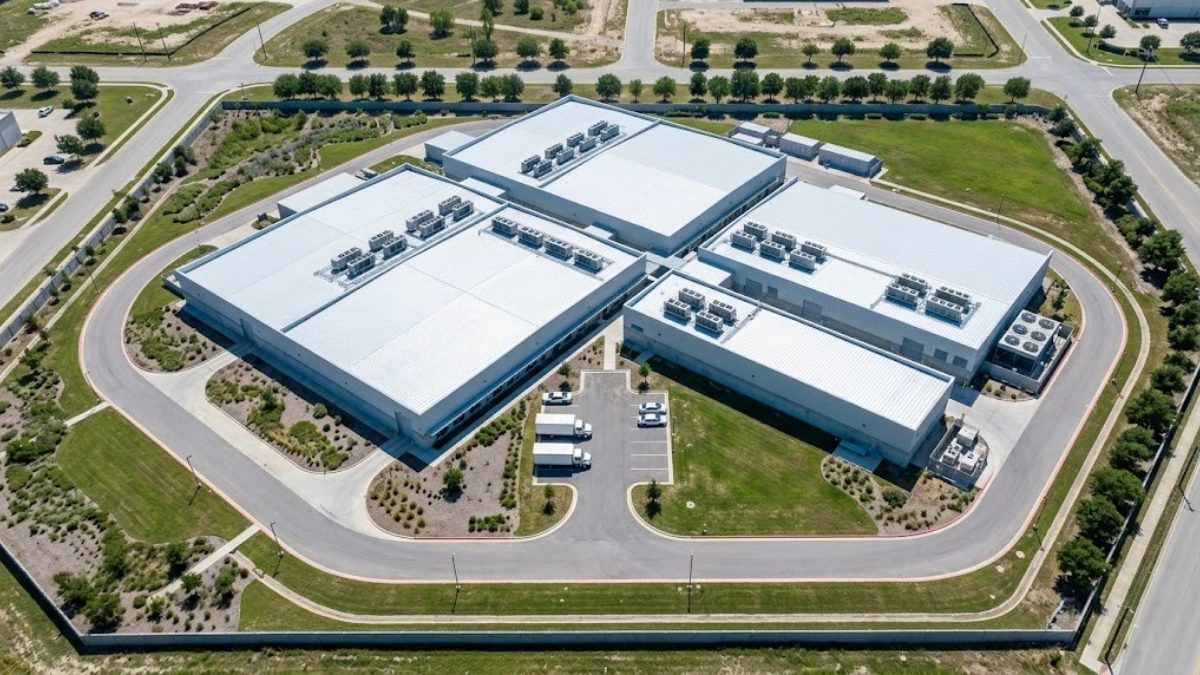
- The Data Center Explosion: Driven by the intense infrastructure arms race for Artificial Intelligence (AI) and cloud computing, data center energy consumption is forecast to skyrocket, officially projected to hit 1,114 TWh by 2050. At this scale, computing architecture alone will consume roughly one-tenth of all electricity produced on Earth.
- Fleet Electrification: The compounding growth of electric vehicle (EV) fleets is permanently cutting into global crude oil baselines. This shift is forcing downstream refineries to structurally pivot toward specialized petrochemical production rather than transport fuel generation.
The Death of 1.5°C and the Rise of the Solar Powerhouse
A headline takeaway from the BloombergNEF New Energy Outlook 2026 is a grim scientific milestone: due to years of persistent emissions and continued capital allocation into high-carbon assets, the long-standing Paris Agreement target of limiting global warming to 1.5°C is no longer structurally feasible. Consequently, global industrial attention is shifting toward rapid decarbonization and grid flexibility:
- The 2032 Solar Threshold: Driven by severe manufacturing overcapacity, collapsing cell costs, and rapid technological advances, solar is set to become the planet’s single largest source of electricity by 2032, ending a century of coal and gas dominance.
- The 17-Fold Storage Jump: To absorb this intermittent solar wave and flatten the global “duck curve,” battery storage deployment is projected to surge 17-fold, leaping from 223 GW in 2025 to 3.8 TW as clean technology takes over baseline operations.
Data Center Power Projection: Plain Text Rule Framework
To ensure flawless processing across corporate content networks and avoid standard system reading bugs, the core mathematical variables defining the future electricity allocation matrix are structured as follows:
- Data Center Consumption Ratio (2050) = 2050 Data Center Electricity Demand (1,114 TWh) ÷ 2050 Total Global Power Generation (11,140 TWh) = ~10%
- Cumulative Demand Growth Rate = A net electricity demand expansion of 69% over the 2025 global power baseline by mid-century.
BNEF 2026 Outlook: Energy Transition Matrix
| Structural Component | 2025 Baseline Baseline | 2032 Inflection Point | 2050 Terminal Horizon |
| Global Data Center Demand | ~500 TWh | ~720 TWh | 1,114 TWh (10% of Global Power) |
| Global Battery Capacity | 223 GW | 1.8 TW | 3.8 TW (17x Growth) |
| Primary Electricity Source | Fossil Fuels (Coal/Gas) | Solar PV (Single Largest) | Renewables & Storage (>75%) |
| 1.5°C Climate Target Status | Highly Strained | Defunct / Unfeasible | Missed (Transitioning to <2.0°C NZS) |
| New Energy Demand Met by Power | ~35% | 66.6% (Two-Thirds) | 66.6% (Stabilized Baseline) |
Strategic View: Infrastructure Tax Policy in the Post-1.5°C World
The BloombergNEF New Energy Outlook 2026 proves that the global energy transition has shed its ideological skin. It has become a cold calculation of national security and corporate margin defense. For corporate tax directors and infrastructure planners, the formal declaration that the 1.5°C target is dead changes the regulatory playing field entirely.
Tax policy is going to shift away from subsidizing simple green generation and move aggressively toward funding grid resiliency, transmission, and localized storage matching. If the planet’s energy mix is dominated by hyper-cheap solar by 2032, the primary bottleneck isn’t the cost of the panels; it’s the cost of the batteries and infrastructure required to move that power. Expect a major global wave of new capital expenditure tax deductions for utility-scale battery deployment, paired with heavy digital services tax adjustments targeting the immense power consumption of AI data center installations.


Click here to open the standard version and post your comment.