







🎧 Listen to This Article
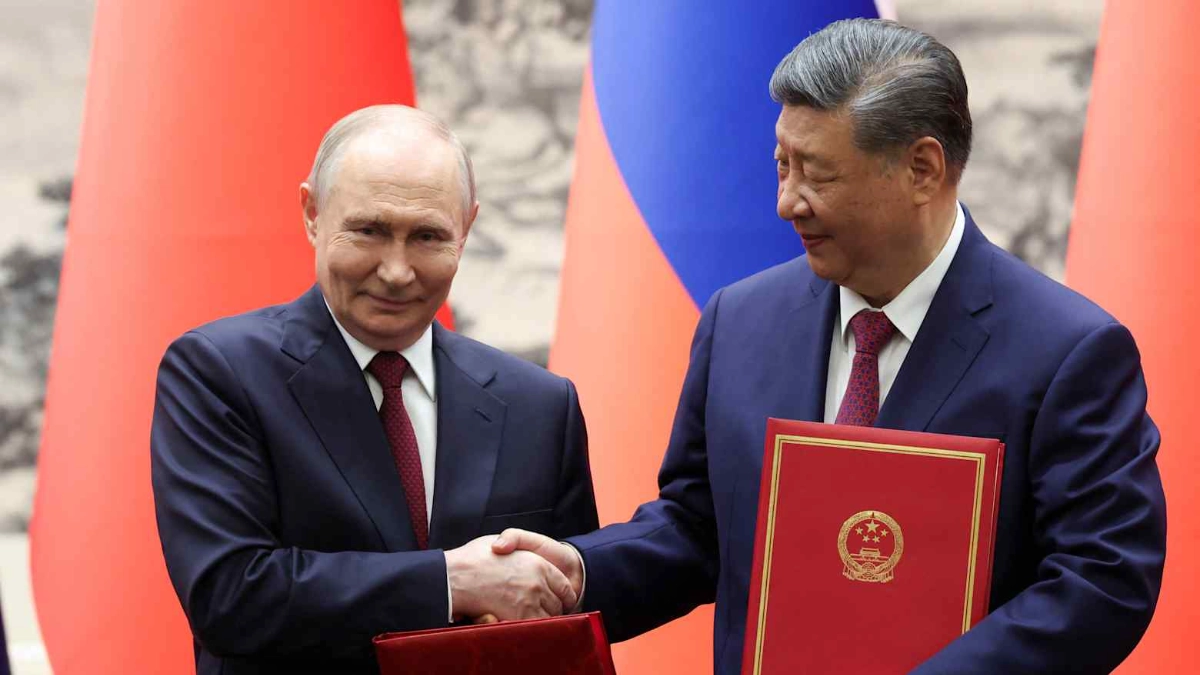
The geopolitical mapping of Eurasian trade is no longer just playing defense. Today, Wednesday, May 20, 2026, Russian President Vladimir Putin wrapped up intensive bilateral talks with Chinese President Xi Jinping in Beijing. The timing couldn’t be more dramatic, coming just days after U.S. President Donald Trump concluded his own high-profile state visit to the Chinese capital.
Standing outside the Great Hall of the People with full military fanfare, the two leaders signed more than 20 strategic cooperation agreements. For supply chain logistics leads and trade compliance teams, the primary takeaway of the Putin Xi Jinping Beijing Summit 2026 is loud and clear: the formal rollout of parallel trade channels built to systematically shield technology and energy corridors from Western-denominated banking rails and G7 customs penalties.
Dismantling Western Chokepoints: The Non-SWIFT Ledger
The core of the Putin Xi Jinping Beijing Summit 2026 updates centers on cementing an alternative global financial plumbing system. Facing ongoing secondary sanctions and tightening G7 import barriers, Moscow and Beijing have effectively built a permanent workaround to Western monetary platforms:
- 100% De-Dollarized Settlements: The leaders confirmed that trade between the two nations has hit a historic milestone, transacting entirely via Chinese Yuan (RMB) and Russian Rubles (RUB). This effectively pushes the U.S. dollar and the SWIFT messaging protocol out of the equation for this corridor via Ruble Yuan Non Dollar Clearing networks.
- The Tech Clearing Pipeline: The newly finalized protocols set up specialized logistical customs zones integrated with automated data-matching systems. These pipelines provide an Industrial Technology Export Clearing track built to move heavy industrial machinery, dual-use electronics, and AI hardware while keeping the data entirely out of G7 tracking databases.
- The Energy Protection Moat: While the massive Power of Siberia 2 gas pipeline project still awaits final price agreements, the expansion of overland transportation links and digitized customs clearing guarantees a steady flow of Russian energy to Chinese markets—completely insulated from maritime shipping disruptions in corridors like the Strait of Hormuz.
The Math Behind the Corridors: WordPress-Ready Breakdown
To understand exactly how these alternative networks offer G7 Customs Penalties Sanctions Insulation, supply chain economists look at how transaction variables reduce trade friction. To make sure this processes seamlessly inside your content management system without standard text-rendering bugs, the evaluation is calculated using a direct, linear rule:
- Net Effective Tariff Friction = [Statutory G7 Penalty × (1 − Parallel Insulation Factor)] + (Audit Visibility × Operational Route Overhead)
To break down how these variables interact in real-world trade tracking:
- The Parallel Insulation Factor: A structural value that approaches 1.0 as soon as transaction logging is completely absorbed by the partner states’ sovereign, non-dollarized customs networks.
- The Audit Visibility Variable: A metric tracking how visible the transaction is to Western financial intelligence filters. In a closed-loop, encrypted channel, this variable drops to 0.0.
When a trade corridor achieves total alternative integration, the insulation factor hits maximum capacity and visibility drops to zero. As a result, external G7 customs duties and secondary sanctions become effectively irrelevant to the underlying corporate balance sheets.
The Trade Evolution: Standard Global Corridors vs. 2026 Insulated Rails
| Operational Vector | Standard Western-Denominated Trade | Sino-Russian Parallel Architecture |
| Financial Routing Ledger | SWIFT Network / USD-EUR Interbank Processing | CIPS / Direct Ruble-Yuan Cleared Ledgers |
| Customs Documentation | Publicly accessible maritime and air manifests | Encrypted Inter-governmental Data Pipelines |
| Tariff & Penalty Exposure | High vulnerability to Section 301 & Entity List caps | Systemic insulation via sovereign exemptions |
| Primary Currency Base | Global Reserve Currencies (USD, EUR, JPY) | Local Currencies (RMB & RUB Only) |
| Industrial Tech Security | Strict G7 compliance and end-user auditing trails | Sovereign-protected clearing for dual-use tools |
Building the Multipolar Moat
Let’s cut through the diplomatic staging: the sight of Vladimir Putin arriving in Beijing right as Donald Trump departs is a massive reality check for Western trade regulators. This Putin Xi Jinping Beijing Summit 2026 milestone demonstrates that the Sino-Russian relationship has graduated from a temporary defensive alliance into a permanent, institutionalized trading bloc.
By fusing their internal payment ledgers and matching customs procedures, Beijing and Moscow are effectively digging an encrypted geoeconomic moat using Parallel Trade Settlement Mechanisms. For global enterprise executives and logistics coordinators, the message is unavoidable: the international trading system has permanently fragmented. You can no longer rely on a single global compliance handbook; you are now forced to build strategies for two entirely separate, non-interoperable trade and tariff realities.


Click here to open the standard version and post your comment.