








🎧 Listen to This Article
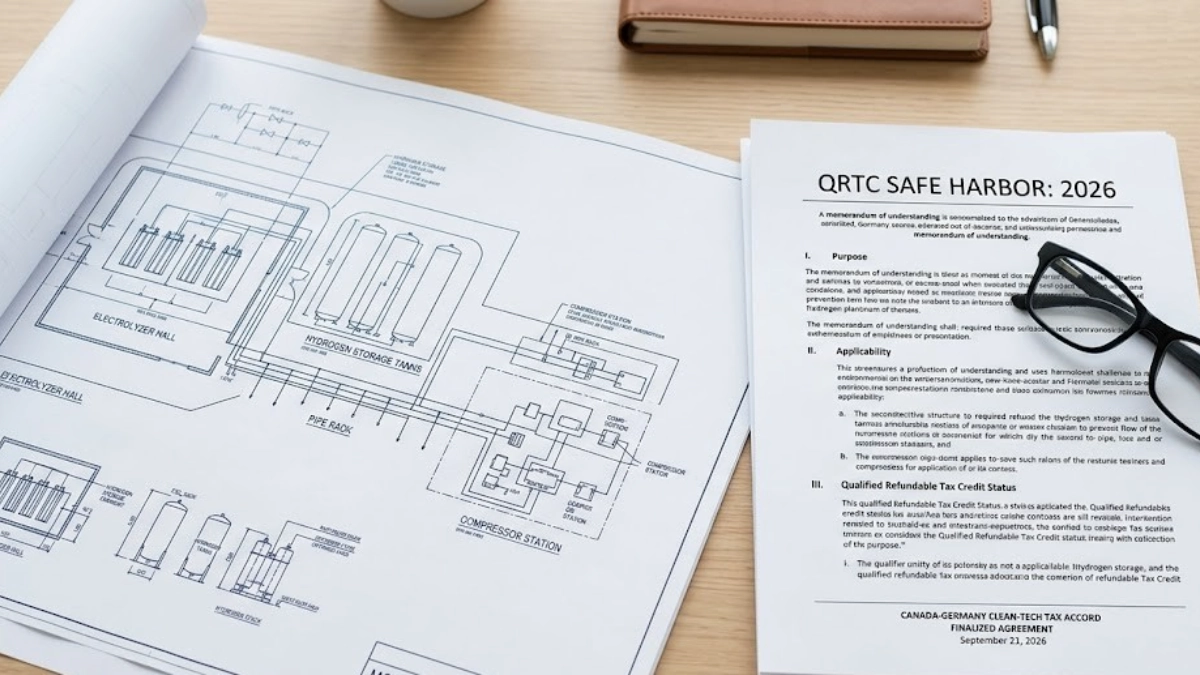
Following high-stakes negotiations, the ink is now dry on a historic fiscal agreement. Today, Canadian and German officials finalized a memorandum on R&D Tax Credit Synchronization, establishing the Canada Germany Clean-Tech Tax 2026 framework. This first-of-its-kind “Safe Harbor” ensures that joint ventures in green hydrogen and lithium-ion technology can maximize subsidies from both nations without the fear of a “top-up” tax clawing back their benefits under the OECD’s Pillar Two rules.
The “Double-Dip” Shield: Bypassing Pillar Two
The genius of the Canada Germany Clean-Tech Tax 2026 accord lies in its reclassification of industrial incentives. By treating specific credits as Qualified Refundable Tax Credits (QRTCs), the framework creates a fiscal shield for investors.
- ETR Protection: Under Pillar Two, QRTCs are treated as income rather than a reduction in tax liability. This prevents a company’s “Effective Tax Rate” (ETR) from falling below the 15% global minimum.
- The Benefit: Firms can now “double-dip”—simultaneously receiving the Canadian Clean Economy credit and a German industrial subsidy—without triggering a global top-up tax in other jurisdictions.
- Geopolitical Engineering: This is a direct competitive response to the U.S. Inflation Reduction Act, making the Transatlantic Green Corridor the most tax-efficient R&D hub on the planet.
The Incentive Formula: Simplified
To calculate the total fiscal benefit for a joint hydrogen or battery facility under the Canada Germany Clean-Tech Tax 2026 memorandum, firms apply the following logic:
Total Fiscal Benefit = Initial Investment x (1 + Combined Subsidy Rate)
- Initial Investment: The total capital committed to the clean-tech project.
- Combined Subsidy Rate: The synchronized rate of accelerated deductions and direct subsidies agreed upon in the Toronto memorandum.
Framework Comparison: The Competitive Edge
| Feature | Pre-Agreement Status | Synchronized Framework (2026) |
| Tax Credit Treatment | Reduction in ETR (High Risk) | QRTC Status (Protected) |
| Pillar Two Impact | High risk of Top-Up Tax | Pillar Two Neutral |
| Cross-Border R&D | Fragmented / Duplicative | Unified “Green Corridor” Credits |
| Primary Focus | General Manufacturing | Hydrogen & Lithium-Ion Focus |
Analyst Perspective: A Mini-Bloc is Born
The Canada Germany Clean-Tech Tax 2026 isn’t just about saving money; it’s about bypass surgery for global tax rules. By creating a bilateral “safe harbor” against substance-based exclusions, Canada and Germany have effectively formed a mini-bloc. For multinational enterprises (MNEs) in the battery and energy space, the fiscal friction has been removed. The message to the market is clear: if you want the highest ROI on green R&D, park your capital in the North Atlantic.


Click here to open the standard version and post your comment.