


🎧 Listen to This Article
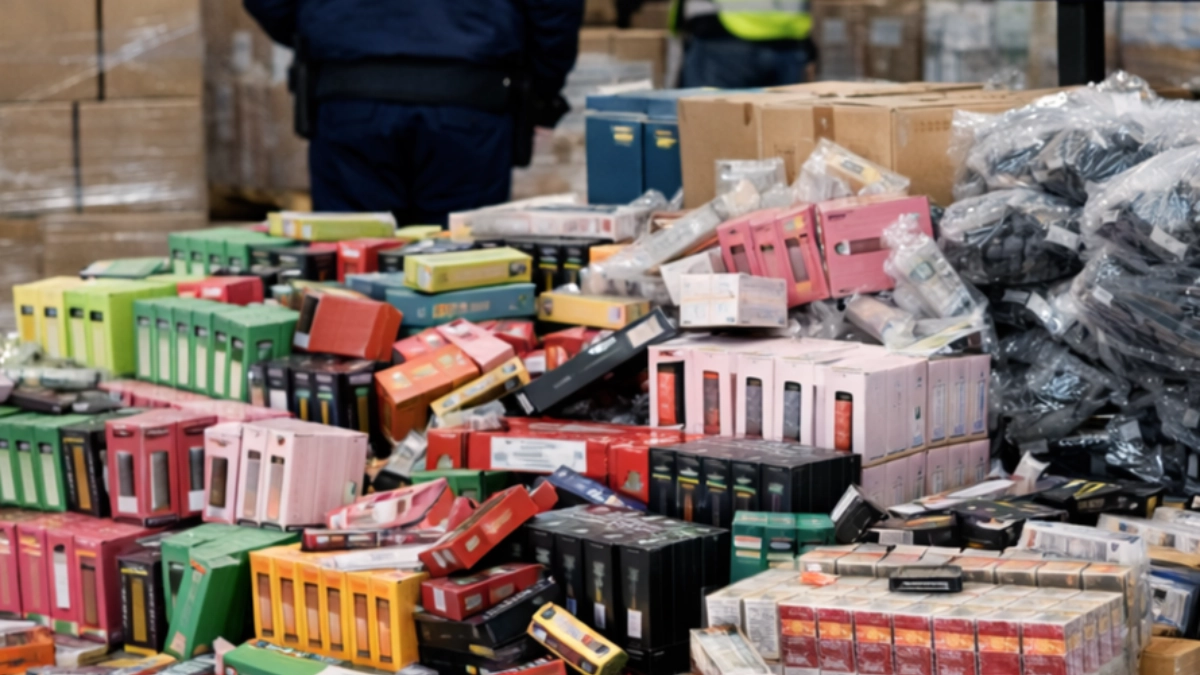
EU vape customs operation results published by OLAF on April 17 have exposed the scale of the illicit nicotine trade across Europe and beyond. The European Anti-Fraud Office said a joint customs operation involving authorities from 30 countries led to the seizure of more than 94 million pieces and over 2,500 kg/l of tobacco products, e-cigarettes, devices, and related goods, underscoring both the excise-revenue threat and the growing compliance challenge tied to cross-border nicotine trafficking.
The operation, known as JCO VAPE, ran from November 14 to December 15, 2025, and was described by OLAF as the first EU and international joint customs operation focused specifically on the illicit trade in e-cigarettes and heated tobacco products. That matters because the market has expanded quickly, while enforcement and tax controls have struggled to keep pace.
According to OLAF, customs authorities targeted illegal flows involving e-cigarettes, heated tobacco products, devices, and associated goods. The outcome was not just a large seizure total. It was also a reminder that illicit nicotine supply chains now sit at the intersection of excise taxes, customs enforcement, fraud prevention, and cross-border compliance.
For tax and customs authorities, the revenue issue is clear. Illicit nicotine products can bypass duty and excise collection, distort legitimate markets, and increase pressure on border controls. For businesses operating in regulated supply chains, the wider implication is compliance risk. The more sophisticated the illicit trade becomes, the greater the need for traceability, classification accuracy, customs controls, and stronger checks across international distribution networks. This is where the EU vape customs operation carries significance beyond the seizure figures themselves.
OLAF said the case demonstrates the continued need for coordinated international enforcement. That message is likely to resonate well beyond tobacco control. It speaks directly to the broader tax challenge facing authorities as high-tax, high-demand products move through increasingly fragmented global trade channels.
