

🎧 Listen to This Article
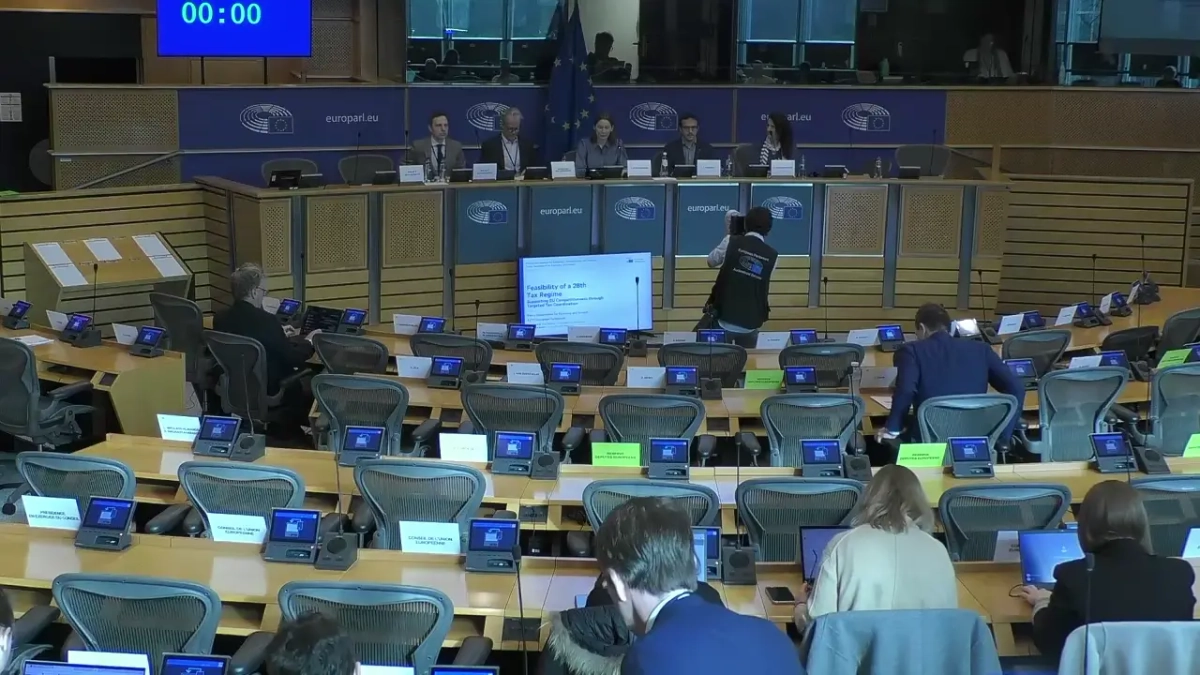
The 27-piece jigsaw puzzle of European taxation might finally be getting a master frame. Today, April 16, 2026, the European Parliament’s Subcommittee on Tax Matters (FISC) met to debate a study on the EU 28th Tax Regime, a proposed optional framework that would allow companies to bypass national tax labyrinths in favor of a single, unified EU code for cross-border operations.
Rather than forcing 27 countries to agree on every comma of their tax law, the “28th Regime” acts as a parallel, voluntary track. It is designed to be the fiscal engine for the newly proposed “EU Inc.” (Societas Europaea Unificata) legal form, aiming to transform the Single Market into a true home court for startups and scale-ups.
Slaying the Compliance Dragon: 30% Savings for SMEs
For small and medium enterprises (SMEs), the primary barrier to expansion in Europe hasn’t been the product—it’s the paperwork. The EU 28th Tax Regime targets this “fragmentation tax” head-on.
- Harmonized Base: A uniform method for determining taxable income, drawing inspiration from previous BEFIT and CCCTB models.
- Loss Relief: Automatic cross-border loss relief, allowing a startup’s losses in Berlin to offset profits in Barcelona.
- Withholding Tax Simplification: Drastically reducing the procedural hurdles for intra-regime payments.
- The “Once-Only” Principle: Digital transmission of company data between registers and tax authorities to prevent redundant filing.
Comparison: The Status Quo vs. The 28th Regime
| Feature | Current 27-State System | EU 28th Tax Regime (Proposed) |
| Regulation | 27 Distinct National Laws | One Harmonized EU Regulation |
| Participation | Mandatory | Optional (Opt-in) |
| SME Compliance Costs | High (Baseline) | ~30% Estimated Reduction |
| Loss Relief | Often Restricted/National | Automatic Cross-Border |
| Registration | Local per Member State | Single EU-wide Digital Interface |
Sovereignty vs. Speed
While the economic benefits are enticing, the debate remains a tightrope walk between efficiency and national pride. Several member states have voiced fears that even an “optional” regime could act as a Trojan horse for the erosion of national fiscal sovereignty.
FISC Discussion Insight: “This is not about replacing national systems; it’s about providing a high-speed lane for those who want to drive across borders. The value lies in a targeted, integrated framework that treats tax as a building block for competitiveness, not a barrier to it.”
The FISC subcommittee is expected to finalize its report by Q3 2026, with the goal of integrating these tax elements into the broader “EU Inc.” legal framework by 2027.
