


🎧 Listen to This Article
The Kenya Revenue Authority (KRA) has initiated its most aggressive revenue mobilization drive to date, officially extending the eTIMS Expansion 2026 into the informal sector. As of today, the “VAT-only” distinction that previously shielded small-scale traders has been removed. By making digital invoicing mandatory for all business income—regardless of VAT status—Kenya is seeking to bring end-to-end visibility to an economy that has long operated in the digital shadows.
The Expense Validation Rule: B2B Pressure
The core of this mandate is a “compliance gate” known as the Expense Validation Rule. For formal businesses, the KRA will now systematically disallow any business expense claimed in a tax return that is not supported by a valid eTIMS invoice.
- Forced Compliance: This creates a ripple effect: formal companies will refuse to buy from informal traders unless they receive an eTIMS receipt, as the buyer would otherwise lose their tax deduction.
- Reverse Invoicing: To support micro-enterprises, the KRA has enabled “Buyer-Initiated Invoicing” on the eCitizen portal. This allows a formal buyer to generate an invoice on behalf of an informal seller to ensure the expense remains deductible.
M-Pesa Integration: Real-Time Monitoring
The technical centerpiece of the eTIMS Expansion 2026 is the formalized integration with M-Pesa. Every “Till Number” and “Paybill” is now effectively a tax signal.
| Feature | Legacy System | 2026 Digital Mandate |
| Visibility | Summary-based / Periodic | Real-Time Transactional |
| Payment Link | Manual Reconciliation | Automatic M-Pesa Trigger |
| Audit Style | Reactive (Post-event) | Predictive (Data-matching) |
| Filing Process | Manual Data Entry | Pre-populated Returns |
By linking mobile money directly to tax servers, the KRA can flag inconsistencies the moment they occur. If a payment is received via M-Pesa without a corresponding eTIMS invoice, the system triggers an automated “nudge” or audit alert.
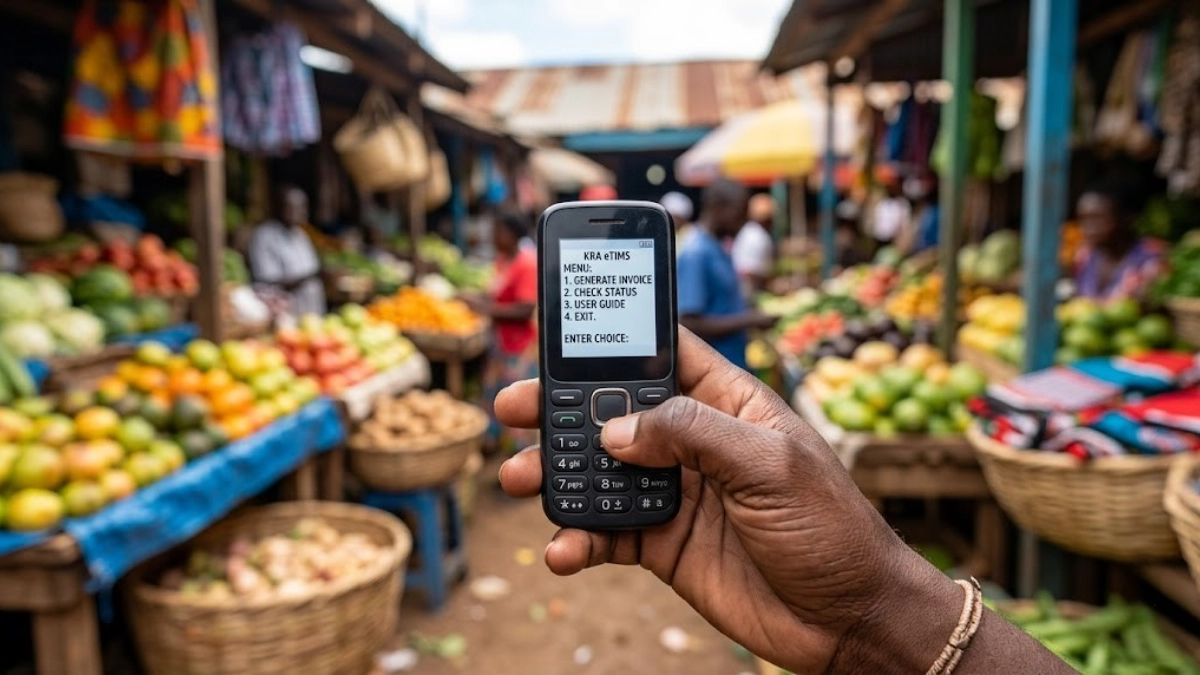
While the KRA frames this as “fiscal inclusion,” it represents a massive shift in the cost of doing business for the “Mama Mboga” (small-scale traders). The availability of USSD codes (dialing *222#) to generate invoices is a vital lifeline, but the real challenge is psychological. For the informal sector, the “taxman’s shadow” just got a lot shorter; in 2026, a till number is no longer just a way to get paid—it’s a real-time audit trail.
