


🎧 Listen to This Article
In a move designed to lubricate the gears of India’s green transition, the GST Council today finalized the India Solar GST 2026 alignment package. By bridging the 6% gap between finished solar systems and their critical components, the government is moving to end the “Inverted Duty Structure” (IDS) that has effectively acted as an interest-free loan from solar developers to the state.
The Inversion Bottleneck: 12% vs. 18%
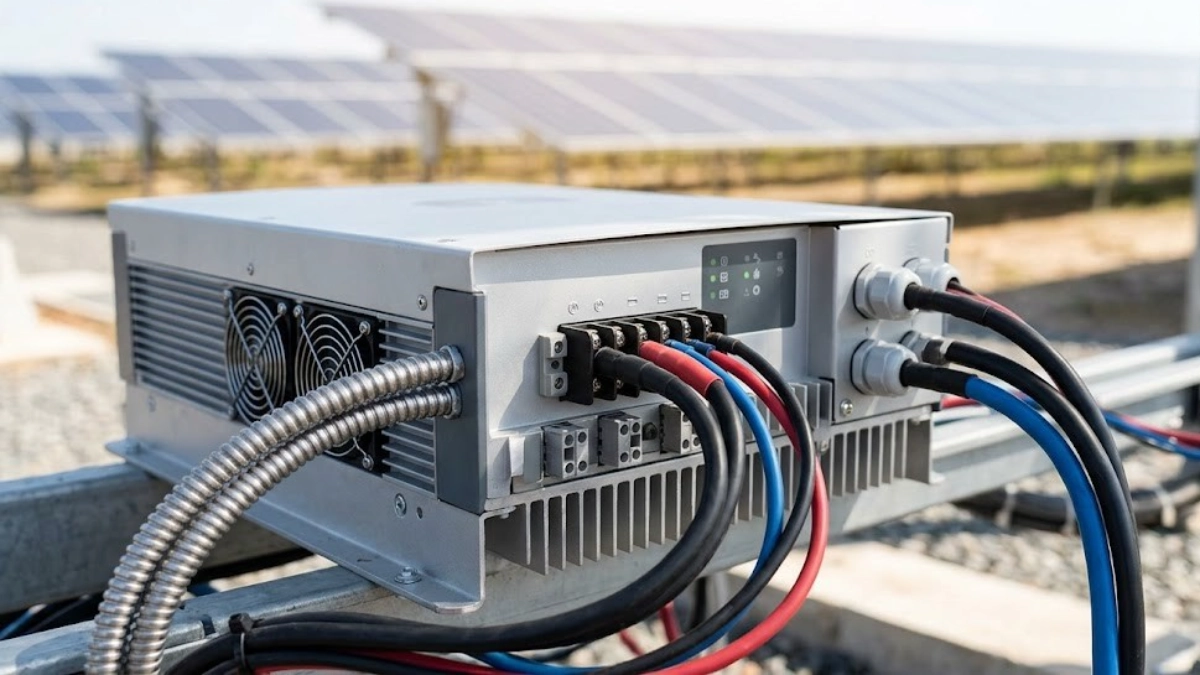
For years, the Indian solar industry has been trapped in a fiscal mismatch. While the final “Solar Power Generating System” was taxed at a concessional 12%, the specialized building blocks—specifically solar controllers and inverters under HSN 8504—were pegged at the standard 18%.
This discrepancy meant that developers were paying more tax on their inputs than they could collect on their outputs, leading to a massive accumulation of Input Tax Credits (ITC) that became “trapped” in the system due to slow refund cycles.
The Alignment Solution: Unlocking ₹45 Billion
The India Solar GST 2026 reforms propose a surgical reduction. Components under HSN 8504, when specifically procured for solar power projects, will now see their rate aligned with the finished device at 12%.
- Liquidity Injection: Industry estimates suggest this realignment will immediately unlock over ₹45 billion in trapped working capital.
- CapEx Reduction: By eliminating the “tax-on-tax” effect, the capital expenditure for new solar farms is projected to drop by 2.5% to 4%.
- Litigation Peace: This move effectively ends years of legal disputes over “composite supplies,” where tax officials often disagreed with developers on whether a controller should be taxed as a part of a system or a separate electronic good.
Comparison: The India Solar GST 2026 Shift
| Feature | Current Framework (Pre-May 2026) | India Solar GST 2026 Alignment |
| Solar Modules/Devices | 12% GST | 12% GST (Stable) |
| Solar Controllers (HSN 8504) | 18% GST | 12% GST (Aligned) |
| Input Tax Credit (ITC) | Accumulated / Trapped | Efficiently Liquidated |
| Project CapEx | Inflated by Tax Friction | Reduced by 2.5% – 4% |
| Compliance Status | High Litigation Risk | Standardized Classification |
Implementation Watch
The success of the India Solar GST 2026 alignment depends entirely on the “End-Use” certification process. To prevent the misuse of the lower 12% rate for non-solar inverters, the Council is expected to introduce a digital tracking mechanism within the E-Way bill system. For developers, this means the relief comes with a new layer of reporting: you must be able to prove that every 12% component is physically installed in a registered solar grid.
