


🎧 Listen to This Article
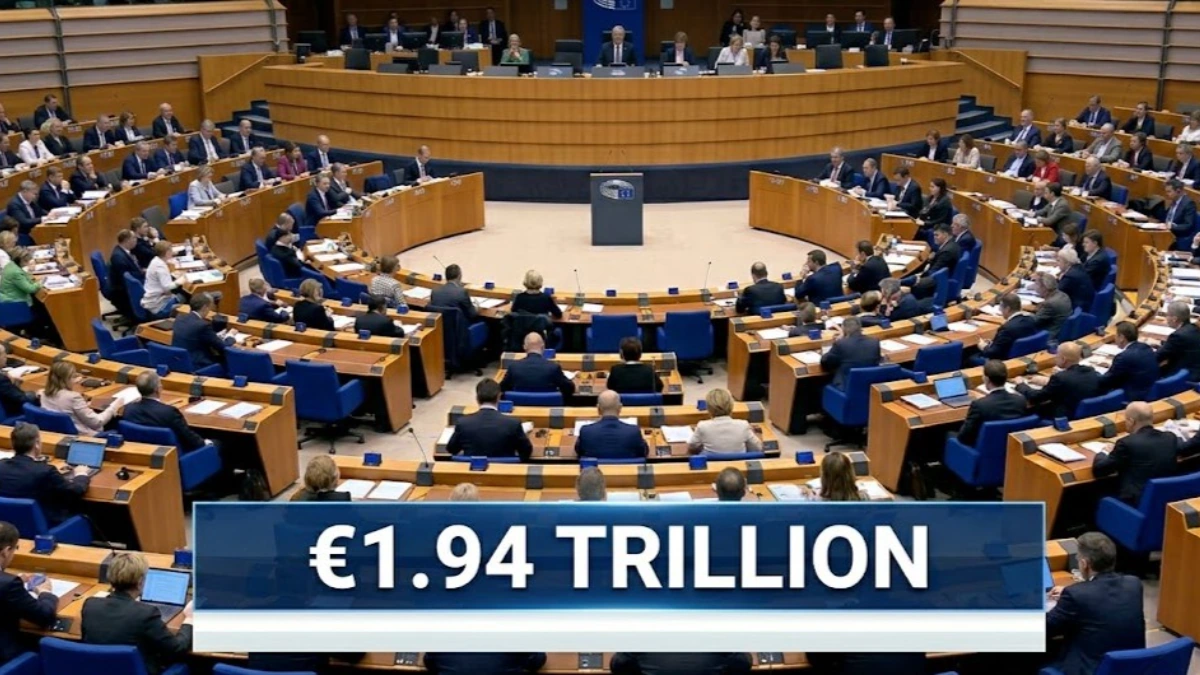
EU Budget Expansion 2026 took a monumental leap today, April 28, 2026, as the European Parliament voted to endorse a significantly expanded 2028–2034 Multiannual Financial Framework (MFF). MEPs approved an interim report seeking a total budget of approximately €1.94 trillion—a 10% increase over the European Commission’s original proposal—setting the stage for a fiscal collision with national finance ministers over the bloc’s tax architecture and “own resources.”
The vote represents a strategic push to decouple the repayment of pandemic-era debt (NextGenerationEU) from core policy spending, while simultaneously introducing new EU-level levies that challenge the traditional fiscal sovereignty of member states.
The €1.94 Trillion Roadmap: Priorities and Own Resources
The Parliament’s proposal seeks to lift the budget to 1.38% of EU Gross National Income (GNI). This expansion is designed to ensure that “traditional” priorities like agriculture and cohesion are not cannibalized by the urgent needs of 2026: industrial competitiveness, defence, and debt servicing.
To fund this “budget bazooka” without increasing national contributions, the Parliament is championing five new EU “Own Resources”:
| Resource Category | Description / Mechanism | Estimated Annual Revenue |
| CORE (Corporate Resource) | A lump-sum contribution from companies with turnover >€100M. | ~€6.8 Billion |
| Tobacco Excise Duty | A harmonized EU-wide rate on tobacco products. | ~€11.2 Billion |
| Digital/Alternative Levies | Taxes on digital giants, online gambling, or crypto gains. | ~€5-10 Billion |
| Non-Recycled E-Waste | A uniform rate applied to the weight of uncollected e-waste. | ~€15 Billion |
| ETS & CBAM | Revenues from carbon permits and the border adjustment mechanism. | ~€11 Billion |
The Sovereignty Clash: MEPs vs. Finance Ministers
The move to implement a Corporate Resource for Europe (CORE) and potential digital levies is viewed by critics as a direct assault on the tax sovereignty of member states. Nations like Germany and the “Frugal” bloc have already signaled fierce resistance, arguing that the power to tax should remain strictly at the national level.
- Pandemic Debt Repayment: The Parliament wants to move the €149 billion interest and principal repayments for the COVID recovery fund outside the MFF spending caps to protect domestic investment programs.
- Industrial Competition: A massive European Competitiveness Fund is proposed to counter the U.S. Inflation Reduction Act and China’s industrial subsidies, specifically targeting clean tech, biotech, and defence.
- The “Muresan” Mandate: Lead rapporteur Siegfried Mureşan stated, “Paying back debt should not be at the expense of beneficiaries and programmes. We believe we cannot do more with less.”
Expert Insight: The inclusion of “own resources” like CORE marks a fundamental shift toward EU Tax Harmonization. If successful, this would be the first time the EU secures a direct, permanent “taxing power” on corporations, potentially reducing the leverage of national finance ministers in future budget cycles.
