


🎧 Listen to This Article
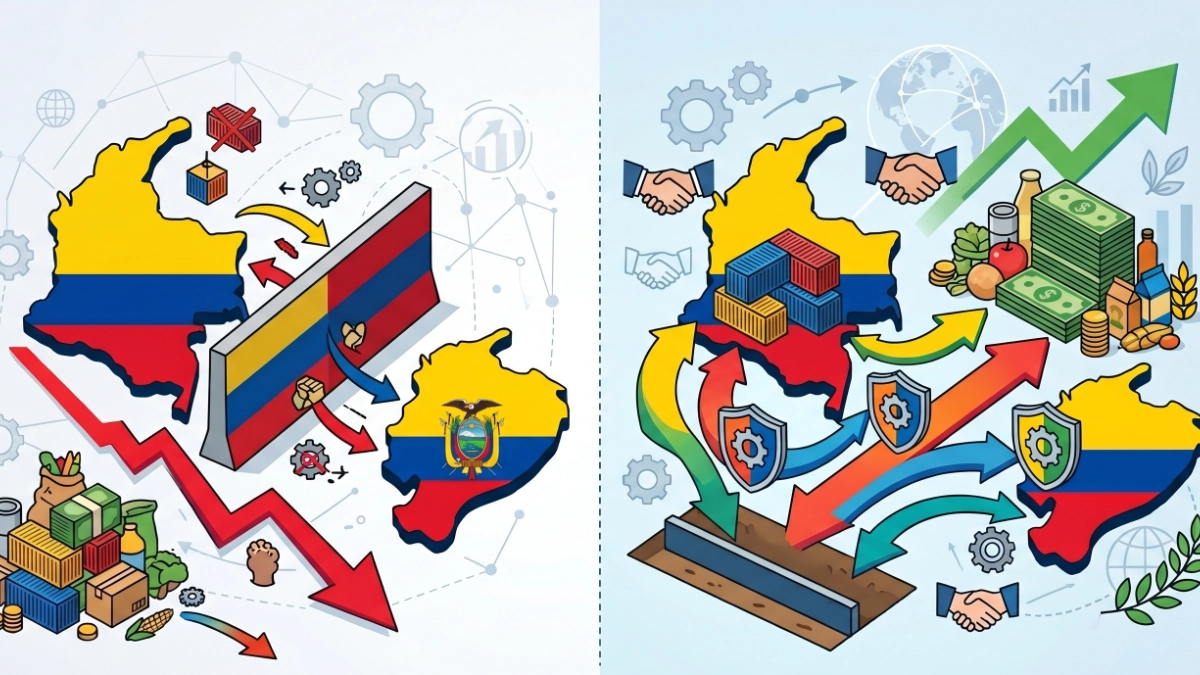
Colombia Customs Duties & Trade Tariffs have taken a sharp turn toward de-escalation today, April 14, 2026, as President Gustavo Petro officially walked back a plan to impose across-the-board 100% levies on imports from Ecuador. This decision, announced during a televised cabinet meeting, effectively pauses what appeared to be an all-out trade war between the two Andean neighbors.
While Colombia will still utilize “smart tariffs” to protect domestic producers, the reversal of the blanket 100% tax is a major relief for supply chains that rely on cross-border trade for raw materials and industrial components.
From Retaliation to “Smart” Protection
The crisis began last week when Ecuador’s government, led by President Daniel Noboa, hiked tariffs on Colombian goods to 100%—citing national security concerns and a lack of cooperation on border control. Colombia initially responded in kind, but President Petro’s latest directive shifts the strategy:
- Exempting Essentials: Colombia will maintain zero-percent tariffs on materials essential to industrial production to prevent a spike in domestic manufacturing costs.
- Targeted Levies: Instead of a blanket 100% rate, Colombia Customs Duties & Trade Tariffs will be adjusted selectively to mirror Ecuadorian moves only where it does not harm the Colombian economy.
- Subsidies for Exporters: Petro announced that the government would provide financial support and credit lines to Colombian exporters specifically targeted by Ecuador’s high duties.
Saving the Andean Trade Bloc
This cooling of tensions is a vital sign for regional stability. Analysts had feared that a prolonged 100% tariff regime would mark the “end of the Andean Pact” for Colombia. By moderating the Colombia Customs Duties & Trade Tariffs response, Petro is keeping the door open for diplomatic negotiations while still signaling that Bogota will not allow its industries to be sidelined by Quito’s protectionist policies.
Economic Insight: Bilateral trade between the two nations exceeded $1.8 billion in 2025. A total 100% tariff wall would have likely erased over half of that volume by the end of 2026, driving inflation up on both sides of the border.
