


🎧 Listen to This Article
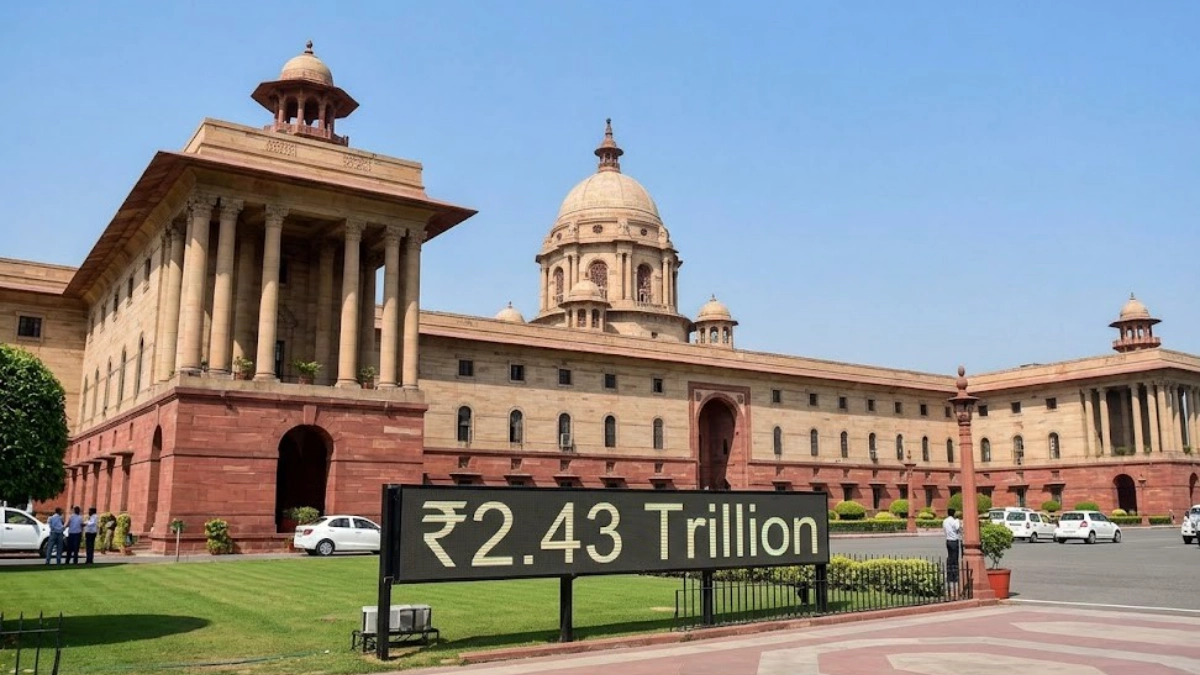
India’s fiscal engines are firing on all cylinders. Official data released today, May 1, 2026, by the Ministry of Finance confirms that India GST Record 2026 has been shattered, with collections hitting a monumental ₹2.43 trillion (2.43 lakh crore) for April.
This represents an 8.7% year-on-year (YoY) growth, proving that the Indian economy isn’t just growing—it’s accelerating. While domestic transactions remained robust, the real star of the show was the massive 25.8% surge in GST from imports, reflecting a significant uptick in cross-border trade and high-value capital goods entering the country.
The Anatomy of a Record: April 2026 Breakdown
The April collection is traditionally the highest of the year due to year-end fiscal closings, but the 2026 figures have outpaced even the most optimistic projections. The “tax leakage” measures introduced by the GST Council last year appear to be paying off handsomely.
| Component | Amount (approx. in ₹ Crore) | Trend (YoY) |
| Total GST Collection | 2,43,000 | +8.7% |
| Import-Linked GST | 58,400 | +25.8% |
| Domestic Transactions | 1,84,600 | +4.2% |
| Refunds Disbursed | 21,500 | +12.0% |
Driving Factors: Beyond the Numbers
The India GST Record 2026 isn’t just a fluke of consumption; it’s a result of structural administrative shifts:
- Import Surge: The 25.8% jump in import GST highlights India’s role as a growing manufacturing hub, with increased imports of raw materials and machinery.
- Leakage Prevention: New AI-driven “Deep Tech” auditing tools implemented by the GSTN (GST Network) have made it significantly harder for fraudulent ITC (Input Tax Credit) claims to pass through the system.
- Compliance Culture: The average monthly collection has now firmly stabilized above the ₹1.8 trillion mark, indicating a maturing tax base.
Grounded AI Insight: While ₹2.43 trillion is a stunning headline, the real story is the Net GST after refunds. Even after returning ₹21,500 crore to taxpayers, the government is left with a massive war chest for infrastructure and social spending. This is “clean” growth, driven by better enforcement rather than just higher tax rates.
