






🎧 Listen to This Article
The enforcement of the Strait of Hormuz Blockade 2026 framework has entered a high-stakes legislative freeze, completely upending immediate market expectations. Today, Sunday, May 24, 2026, U.S. President Donald Trump instructed American negotiators “not to rush into a deal” with Tehran, asserting that time is firmly on Washington’s side.
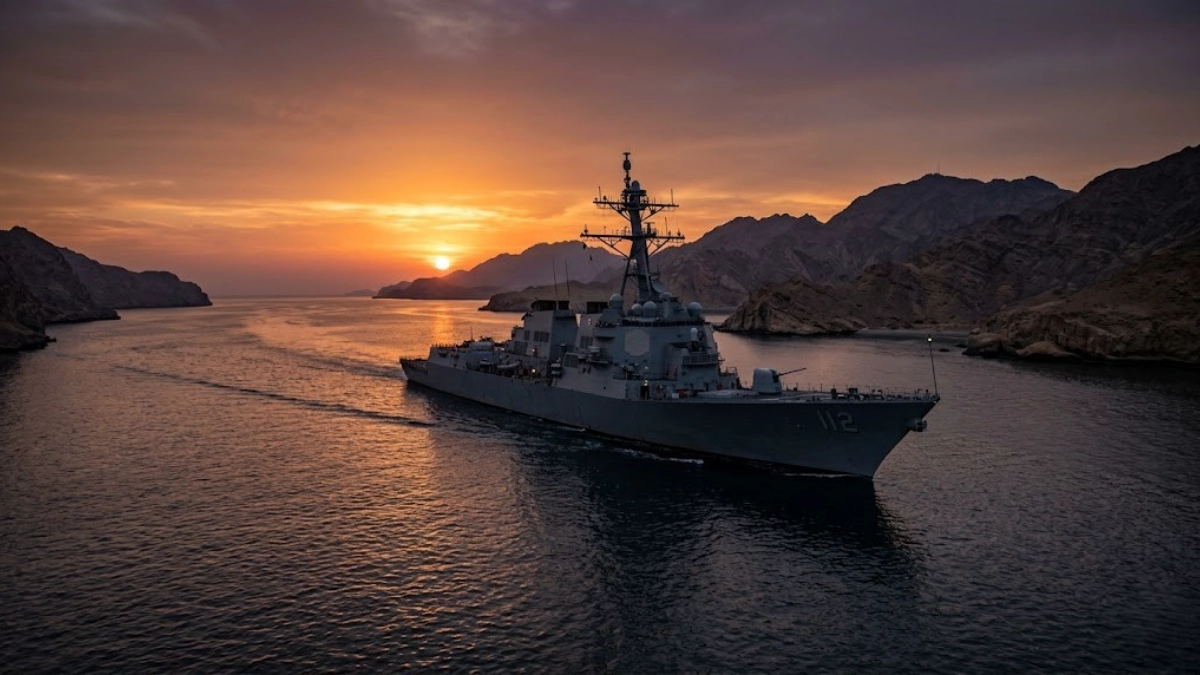
Trump confirmed that the rigorous U.S. naval blockade targeting Iranian ports—operational since April 13, 2026—will remain in full force and effect until a comprehensive agreement is reached, certified, and signed. The sudden announcement tempers a weekend of intense diplomatic optimism after international mediators outlined a sweeping framework to temporarily dismantle the maritime embargo.
Reopening the Moat: The Proposed Framework Under the Strait of Hormuz Blockade 2026
The details of the potential breakthrough, mediated heavily by Pakistan and backed by regional Gulf allies, were clarified by U.S. Secretary of State Marco Rubio. Rubio confirmed that back-channel negotiations over the last 48 hours have mapped out a 60-day ceasefire extension engineered to provide immediate structural relief to global supply chains caught in the Strait of Hormuz Blockade 2026 dragnet.
The proposed macro-trade trade-off contains four core pillars:
- The Toll-Free Reopening: Iran would completely restore unrestricted freedom of navigation through the channel, contractually stripping away the arbitrary transit tariffs and restrictive permits recently applied by the Islamic Revolutionary Guard Corps (IRGC) navy.
- Naval Mine Clearance: Joint regional maritime task forces would immediately begin extracting defensive naval mines deployed across the chokepoint, providing underwriters the structural security required to roll back astronomical war-risk insurance premiums.
- Sovereign Port Relief: In reciprocal alignment, the United States would temporarily suspend its CENTCOM-enforced maritime blockade, allowing commercial cargo hulls to dock at and depart from Iranian seaports without facing immediate asset forfeiture.
- The Liquidity Inflow: The framework outlines the phased unfreezing of selective Iranian sovereign bank assets held overseas—estimated by regional sources to encompass a potential $25 billion capital pool—leveraged as a strict compliance guarantee.
The Nuclear Impasse: Separating Trade from HEU Stockpiles
Despite the structural progress on shipping logistics under the active Strait of Hormuz Blockade 2026 operational timeline, a deep geopolitical friction point prevents a final signature. A senior Iranian official confirmed to Reuters today that Tehran has flatly rejected Washington’s core demand to export or surrender its highly enriched uranium (HEU) stockpile.
By treating its 440kg infrastructure of weapons-grade material as an absolute red line of sovereign defense, the Iranian leadership has effectively decoupled the core nuclear non-proliferation issue from the preliminary trade and tariff architecture. While Washington intends to eventually take control of or destroy the material under a parallel 30-to-60 day evaluation track, the IRGC has maintained an aggressive defensive stance. To signal its leverage over global energy flows while negotiations continue, the IRGC navy permitted only 33 vessels to clear the strait under restrictive permits over the last 24 hours, keeping global distribution channels highly constrained.
The Ceasefire Liquidity Coefficient: Plain-Text Operations Model
To evaluate the net macro-economic dividend injected into global trade networks by a temporary 60-day maritime de-escalation while the Strait of Hormuz Blockade 2026 is actively monitored, international trade desks utilize a system-safe, plain-text math formula to calculate asset values:
Ceasefire Liquidity Valuation = [ Sum of (Vessel Capacity × (Insurance Reduction + Toll Cost Savings)) + (Unfreeze Velocity × Frozen Iranian Assets Target) ] × (1 − Nuclear Friction Coefficient)
To map this model cleanly into automated enterprise risk auditing dashboards:
- Vessel Capacity: The volumetric freight or crude capacity of an individual vessel waiting to clear the chokepoint.
- Insurance Reduction: The projected reduction in maritime war-risk insurance surcharges following verified naval mine clearance.
- Toll Cost Savings: The clear financial savings realized by the complete elimination of un-codified transit levies and Customs Duties Maritime Transit Tolls.
- Unfreeze Velocity: The partial unfreezing velocity constant managed by the U.S. Treasury’s Office of Foreign Assets Control (OFAC).
- Frozen Iranian Assets Target: The total pool of overseas sovereign Iranian assets targeted for administrative release, baseline locked at a $25 billion threshold.
- Nuclear Friction Coefficient: The structural friction modifier tracking the unresolved risk of the highly enriched uranium stockpile impasse. When this metric remains elevated, it suppresses net asset values by pricing in an immediate return to hostilities if talks collapse.
The Maritime Matrix: Active Embargo vs. Proposed Ceasefire
The tactical choices facing global freight management under the Strait of Hormuz Blockade 2026 architecture dictate unique insurance and operational profiles:
| Logistics & Tariff Vector | Active Enforced Blockade (Since April 13) | Proposed 60-Day Ceasefire Framework |
| Strait of Hormuz Status | Structurally restricted; 33 vessels cleared via permit | Open transit rails; active task-force mine clearance |
| U.S. Navy Port Interdiction | 100% Blockade of all inbound/outbound Iranian hulls | Temporary lifting of CENTCOM commercial embargo |
| Chokepoint Transhipment Tolls | Variable levies applied by IRGC naval patrols | Statutorily formalized toll-free navigation |
| Overseas Capital Assets | Absolute asset freeze across international banks | Phased, conditional release of up to $25B |
| Nuclear Stockpile Mandate | Continuous U.S. demand for immediate HEU extraction | Deferred to an independent, secondary 60-day track |
The Strategic Leverage of Delayed Signatures
Let’s look past the diplomatic posturing and analyze the hard bargaining reality: President Trump’s warning to his negotiators “not to rush into a deal” is a textbook demonstration of weaponized economic leverage. On paper, the 60-day ceasefire framework looks like a masterclass in compromise: global energy corridors get a toll-free opening and mine clearance, while Tehran gets a $25 billion financial life-support line.
But by flatly refusing to bundle the highly enriched uranium stockpile into this preliminary trade text, Iran has left the ultimate military trigger completely active. Trump understands that the moment he lifts the Strait of Hormuz Blockade 2026 restrictions and unfreezes those bank accounts, his structural leverage degrades. For global shipping firms and corporate energy buyers, today’s stand-off means that while a temporary diplomatic patch is close, the underlying risk premium isn’t going anywhere. You cannot safely re-price long-term supply sheets when the world’s most volatile shipping lane is operating on a temporary 60-day lease while a weapons-grade uranium stockpile sits just over the horizon.


Click here to open the standard version and post your comment.