


🎧 Listen to This Article
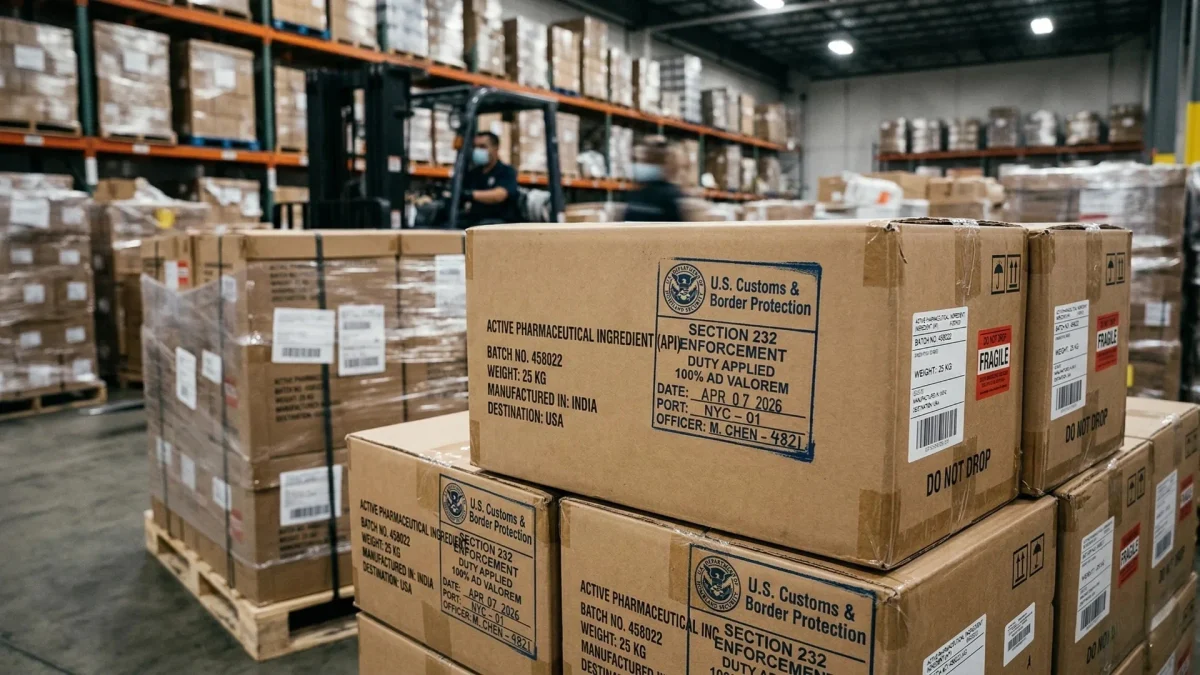
The landscape of global healthcare trade has undergone a tectonic shift today, April 7, 2026, as the United States officially activated a sweeping new layer of Section 232 Pharma Tariffs. Following a series of presidential proclamations aimed at safeguarding national security, the U.S. Customs and Border Protection (CBP) has begun enforcing a 100% duty on specific patented pharmaceuticals and Active Pharmaceutical Ingredients (APIs).
This aggressive fiscal measure marks the most significant intervention in the pharmaceutical supply chain in decades, moving the U.S. from a policy of trade openness to one of aggressive “reshoring.”
National Security and the Reshoring Mandate
The implementation of the Section 232 Pharma Tariffs is predicated on the “national security” provision of the Trade Expansion Act of 1962. By doubling the landed cost of foreign-manufactured patented drugs and their primary chemical components (APIs), the policy creates a massive financial incentive for manufacturers to relocate production to domestic soil.
Key pillars of the new enforcement include:
- 100% Ad Valorem Duty: Applied to a high-priority list of patented medications and critical chemical precursors.
- Targeted Supply Chains: The tariff specifically targets “non-aligned” nations, significantly increasing the tax burden on suppliers from regions outside of established strategic partnerships.
- Tiered Exemptions: To prevent immediate shortages and maintain diplomatic stability, the U.S. has implemented tiered exemptions for the United Kingdom and the European Union, allowing their pharmaceutical exports to remain competitive under specific quotas.
Industry Implications: The API Squeeze
The most critical aspect of the Section 232 Pharma Tariffs is the focus on Active Pharmaceutical Ingredients. Since APIs are the fundamental building blocks of almost all medications, even “U.S.-made” finished drugs that rely on foreign ingredients will face a sharp rise in cost-of-goods-sold (COGS).
Industry analysts expect that while the UK and EU exemptions provide a temporary buffer, global life sciences firms will need to rapidly audit their HTS codes and supply chain “alignment” to avoid devastating 100% duties. For the healthcare sector, the priority has shifted overnight from “cost-efficiency” to “regulatory alignment and reshoring.”
