


🎧 Listen to This Article
The conclusion of the SADC Foreign Ministers Retreat 2026 marks a structural shift as Southern Africa’s collective economic architecture transitions from passive vulnerability to defensive consolidation. Today, Sunday, May 24, 2026, the Southern African Development Community (SADC) Ministers of Foreign Affairs concluded their high-profile, three-day strategic summit in Skukuza, Kruger National Park, South Africa.
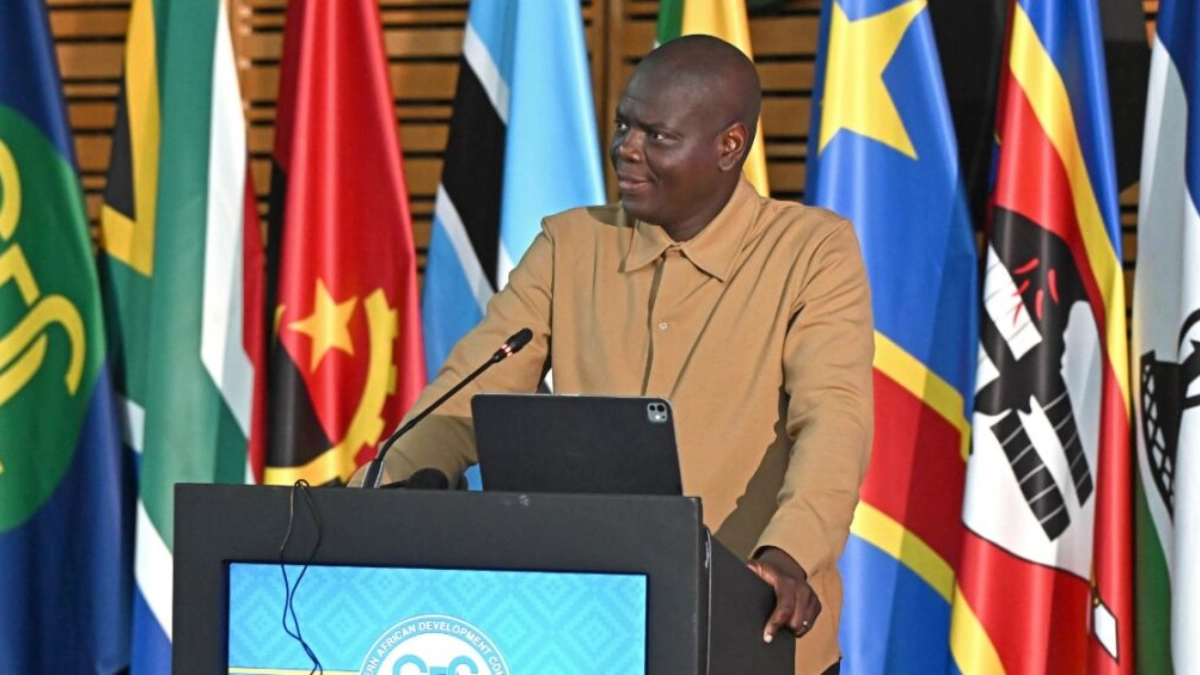
Chaired by South Africa’s Minister of International Relations and Cooperation, Ronald Lamola, the executive session concluded with the formal release of the Skukuza Outcome Statement. The declaration establishes an integrated economic defense framework engineered to insulate the 16-member trade bloc from compounding macro-shocks—most notably the rolling trade paralyzation caused by active maritime blockades in the Middle East, escalating climate anomalies, and severe local currency depreciations.
Geopolitical Insulation: Breaking Down the SADC Foreign Ministers Retreat 2026 Initiatives
Addressing regional delegates on the eve of Africa Day, Minister Lamola asserted that the future of the SADC trade bloc will be fundamentally dictated by its capacity to act as a singular geoeconomic unit. With regional supply networks buckling under the weight of external conflicts—which have artificially inflated the cost of global fertilizer, refined petroleum, and grain imports—the SADC Foreign Ministers Retreat 2026 assembly finalized a coordinated response structured across five core pillars:
- Public Debt Management & Financial Integration: Transitioning away from reliance on highly conditional Western capital markets and non-concessional foreign credit, the ministers prioritized the rapid capitalization of the SADC Regional Development Fund. This move aims to provide a sovereign shield against debt-service traps during high-interest cycles through the formation of a regional “Borrowers Club.”
- Aggressive Domestic Revenue Mobilization (DRM): To close infrastructural deficits without expanding external debt sheets, the framework mandates the cross-border harmonization of digital tax administration systems. The focus is centered on plugging illicit capital flight channels and maximizing extractive resource revenues.
- Regional Value Chain Industrialization: Moving beyond raw commodity export dependencies, the bloc finalized plans for localized special economic zones (SEZs). These zones are designed to accelerate regional mineral beneficiation, specifically targeting the processing of lithium, copper, and cobalt within sub-Saharan borders.
- Resilient Transport & Logistics Infrastructure: SADC will fast-track the digitization of its primary overland transport veins, including the Maputo, Dar es Salaam, and Walvis Bay corridors, alongside key investments into Angola’s Lobito corridor to bypass maritime supply chain distortions and cut port congestion latency.
- Free Movement of Skilled Labor: The outcome text signals an administrative push to relax visa barriers for technical specialists, engineers, and agricultural experts to ensure that industrial expertise can be deployed across border lines without friction.
The Strategic Transition: Legacy Frameworks vs. The 2026 Skukuza Directive
The operational shifts approved during the SADC Foreign Ministers Retreat 2026 session represent a permanent structural update to the SADC Regional Indicative Strategic Development Plan (RISDP) 2020–2030:
| Development Vector | Legacy SADC Blueprint | Active Enforced 2026 Skukuza Framework |
| Financing Mechanism | Heavy reliance on external ODA and foreign debt | SADC Development Fund & Enhanced Local DRM Tracking |
| Mineral Asset Security | Exportation of unrefined ores and raw concentrates | Mandatory Cross-Border Beneficiation & SEZ Corridors |
| Logistics Risk Shield | Fragmented, state-specific border checkpoints | Encrypted Digital Transit Passes & Corridor Harmonization |
| Currency Risk Defense | Unhedged exposure to USD-denominated invoicing | Phased Integration of Local-Currency Clearing Modules |
| Agricultural Inputs | High vulnerability to volatile G7 fertilizer chains | De-risked Regional Agro-Processing & Storage Hubs |
SADC Macro-Fiscal Vulnerability Index: Plain-Text Operations Model
To prevent common WordPress script conflicts and guarantee that regional audit dashboards parse data cleanly, the SADC Secretariat’s macro-modeling division tracks sovereign exposure to external logistical and monetary shocks using a direct, plain-text math framework:
Macro-Fiscal Vulnerability Score = [ (Gross Public Debt Ratio × Global Trade Exposure Coefficient) ÷ Domestic Resource Mobilization Factor ] + [ Regional Climate Vulnerability Parameter × (Exchange Rate Depreciation Delta ÷ Initial Exchange Rate Baseline) ]
To map this model directly into automated regional tracking dashboards:
- Gross Public Debt Ratio: The gross public debt-to-GDP ratio of an individual member state.
- Global Trade Exposure Coefficient: The country’s trade exposure coefficient to global maritime and energy chokepoint blockades (such as active shipping gridlocks driving up cross-border input costs).
- Domestic Resource Mobilization Factor: The verified domestic resource mobilization efficiency factor, measuring tax revenue velocity and Domestic Revenue Mobilization SADC metrics.
- Regional Climate Vulnerability Parameter: The regional climate vulnerability parameter, mapping localized infrastructure exposure to severe drought or flooding.
- Exchange Rate Depreciation Delta Ratio: The relative annualized exchange rate depreciation delta calculated against hard global reserve currencies.
The Operational Target: By implementing the modules settled at the SADC Foreign Ministers Retreat 2026 conference, the bloc intends to aggressively expand the domestic revenue denominator while compressing external trade exposure, mathematically lowering the aggregate vulnerability score across sub-Saharan Africa.
The High Cost of Belated Solidarity
Let’s look past the idealistic political terminology and analyze the hard bargaining reality: the Skukuza Outcome Statement provides a clear reality check for anyone tracking African economic integration. Regional solidarity is no longer an abstract diplomatic goal—it is a brutal survival strategy.
For years, SADC member states have operated as fragmented, hyper-exposed commodity exporters, comfortably ignoring the structural necessity of local value chains. Now, with international conflict choking fertilizer supplies and driving inflation deep into sub-Saharan food baskets, global economic realities have forced the bloc’s hand.
The push to expand domestic resource mobilization and fund the SADC Development Fund internally is exactly the right macroeconomic medicine. However, the real test won’t be signing the blueprint in Kruger National Park; it will be whether powerful member states are willing to sacrifice short-term national customs revenues to build a truly integrated, frictionless trade wall.
