


🎧 Listen to This Article
The global supply chain is absorbing another sharp shock, proving once again that microscopic disruptions can trigger massive macroeconomic waves. Today, Wednesday, May 20, 2026, logistics providers, port operators, and trade underwriters across East Africa are aggressively shifting their operations. The scramble follows the World Health Organization’s (WHO) official declaration designating the Ebola outbreak along the Democratic Republic of the Congo (DRC) and Uganda border as a Public Health Emergency of International Concern (PHEIC).
This particular crisis is fueled by the rare Bundibugyo virus strain—a variant with no currently approved vaccines or targeted therapies. The outbreak has spread across the DRC’s Ituri Province and has already reached as far as Kampala, Uganda. In response, the U.S. Centers for Disease Control and Prevention (CDC) has issued a CDC Level 1 Travel Notice Uganda warning, setting off mandatory health screenings and border clearance delays that are acting as a heavy, tariff-equivalent tax on regional commerce.
The Border Dragnet: Health Screening as a Trade Barrier
While the WHO explicitly advises against locking down international borders to avoid economic panic and unmonitored smuggling bypasses, the boots-on-the-ground reality tells a very different story. The sudden deployment of aggressive Point of Entry (PoE) medical screenings is creating intense friction across vital shipping lanes.
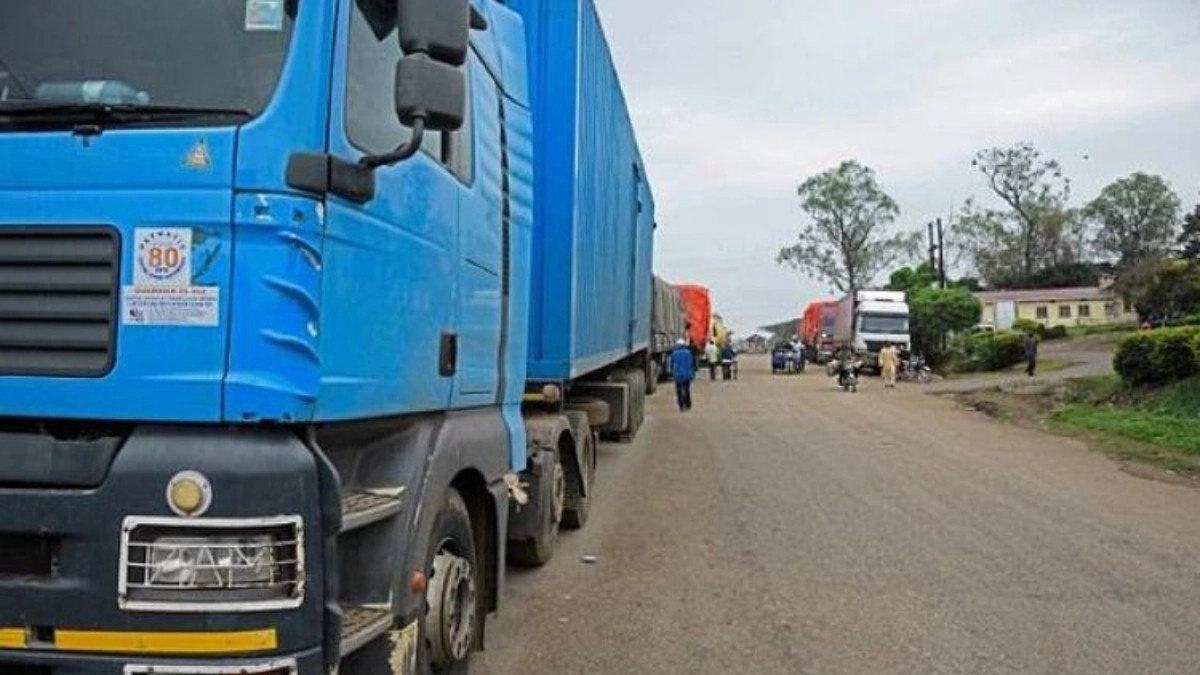
At major arterial border crossings like Mpondwe between Uganda and the DRC, customs agents are enforcing a rigorous double-validation system that hits commercial truck fleets hard:
- Cargo Quarantine Risk: Commercial drivers are facing massive multi-day backlogs. Border teams are demanding full biological and thermal screening clearances before they will even begin reviewing standard shipping manifests.
- The Premium Escalation: Insurance syndicates have moved instantly to adjust their transit policies along the key Northern and Central corridors. Freight operators are getting slapped with an immediate East Africa Logistics Insurance Surcharge to hedge against extended container detentions, missed drop windows, and potential cargo abandonment in volatile zones.
The Transit Friction Multiplier: Plain-Text Breakdown
To help fleet managers and enterprise supply chain planners accurately model these unexpected operational costs without running into website formatting or math code glitches, the added biological overhead can be calculated using a direct, linear tracking rule:
- Total Logistics Cost = Baseline Cost × [ 1 + (Congestion Factor × (Screening Delay ÷ Original Transit Time)) ] + Risk Premium Surcharge
To map this out clearly inside a corporate cost matrix, the equation balances three distinct real-world realities:
- The Congestion Factor: A variable driven by the lack of unified digital health-pass systems in remote African transit zones.
- The Screening Delay: The specific number of incremental days added to the route by physical medical checkpoints at ports of entry.
- The Risk Premium Surcharge: The emergency premium hike forced onto the route by underwriting desks following the WHO’s emergency announcement.
Sectoral Supply Chain Disruptions: May 2026
The immediate cargo pipeline reflects an economy operating under sudden operational strain:
| Logistics & Trade Element | Baseline Pipeline Status | Active PHEIC Emergency Level | Impact Vector & Latency |
| Cross-Border Trucking (DRC-Uganda) | 4–6 hour standard clearing | 48–72 hour mandatory holds | Severe; driver health checks freeze physical manifests. |
| Regional Inland Terminals | Fluid storage turnover | Capacity Squeeze / Backlogged | High; stagnant freight piling up at transit nodes. |
| Transit Risk Insurance Premiums | Standard actuarial baseline | +12% to +18% Emergency Surcharge | Immediate; reflecting prolonged asset and fleet exposure. |
| Bilateral Trade Corridors | Fully open trading rails | Policed Points of Entry Only | Medium; diversion of informal trade to unmonitored routes. |
The High Cost of Biological Friction
Let’s cut through the diplomatic health advisories: the WHO Ebola PHEIC 2026 Outbreak declaration is a blunt wake-up call for global enterprises that still view Central and East Africa as a simple plug-and-play resource extraction zone.
Because the Bundibugyo Virus DRC Uganda Border strain lacks the quick vaccine shield available for the Zaire variant, physical containment is the only tool regional governments have left. For logistics executives, this means your time-sensitive shipping lanes are now entirely at the mercy of localized medical checkpoints. A 72-hour logjam at a remote border outpost doesn’t just stop one truck; it ripples backwards all the way to major ports like Mombasa or Dar es Salaam, spiking storage fees and draining margin value. In 2026, real trade resilience means budgeting for biological bottlenecks long before your cargo ever hits the road.
