


🎧 Listen to This Article
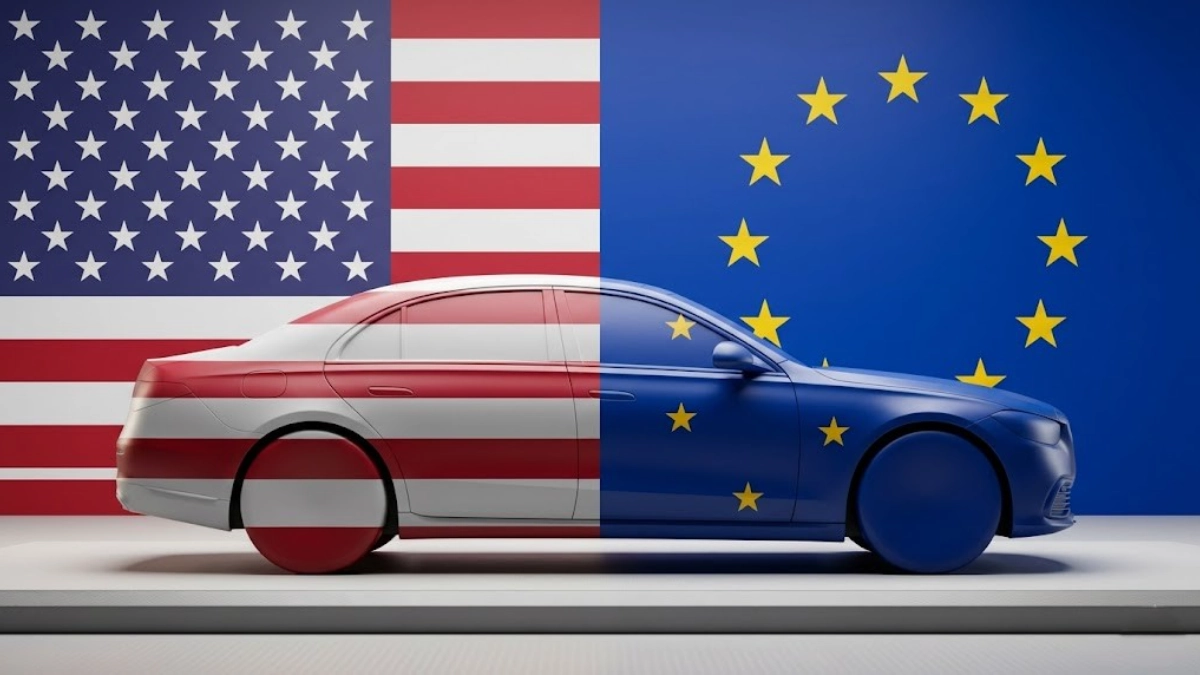
US-EU Auto Tariff Hike 2026 sent a shockwave through the global markets today, May 2, 2026, following President Trump’s announcement that the U.S. will increase import tariffs on European Union cars and trucks to 25%. This move marks an escalation from the 15% rate established under the July 2025 “Turnberry Agreement,” which the administration now claims Brussels has failed to honor.
Citing a lack of reciprocity and “noncompliance” with industrial standards and vehicle quotas, the administration is moving to pressure European giants like Volkswagen, BMW, and Mercedes-Benz to accelerate their shift toward U.S.-based manufacturing.
The Pivot: From IEEPA to “Substitute Authorities”
Following a landmark February 20, 2026, Supreme Court ruling (Learning Resources Inc. v. Trump) which stripped the executive of the power to impose sweeping tariffs under the International Emergency Economic Powers Act (IEEPA), the White House has pivoted to alternative legal “sticks.”
- Section 301 (Trade Act of 1974): The administration is leveraging findings from the Section 301 investigation launched in March 2026 into EU trade practices.
- Section 122 (Trade Act of 1974): While typically used for balance-of-payments emergencies, this authority allows for temporary surcharges of up to 15%, which, when stacked with existing duties, reaches the 25% target.
- Section 232 (National Security): Ongoing justifications regarding the “erosion of the domestic automotive industrial base” remain a fallback for permanent enforcement.
Economic Impact: The Consumer vs. The Factory
The administration argues that these tariffs are the only way to “level the playing field,” citing the $100 billion currently being invested in U.S. auto plants as proof of the strategy’s success. However, industry analysts warn of a “double-edged sword” effect:
| Impact Area | Consequences |
| European Manufacturers | Squeezed margins for brands like Stellantis (Alfa Romeo, Maserati) and potential export volume drops for German luxury brands. |
| U.S. Consumers | Estimated price hikes of $3,000 to $9,000 on imported models, including popular SUVs and hybrid variants not yet produced in the States. |
| Domestic Plants | Possible acceleration of “on-shoring,” though logistics and labor shortages remain significant bottlenecks for 2027 completion dates. |
| Trade Relations | Brussels has threatened “proportionate” retaliation, specifically targeting U.S. agricultural exports and tech hardware. |
Strategic Insight: This move is less about revenue and more about geopolitical leverage. By hiking tariffs now, the administration is forcing a renegotiation of the Turnberry Agreement before the scheduled USMCA review later this year, using the EU automotive sector as the ultimate bargaining chip.
